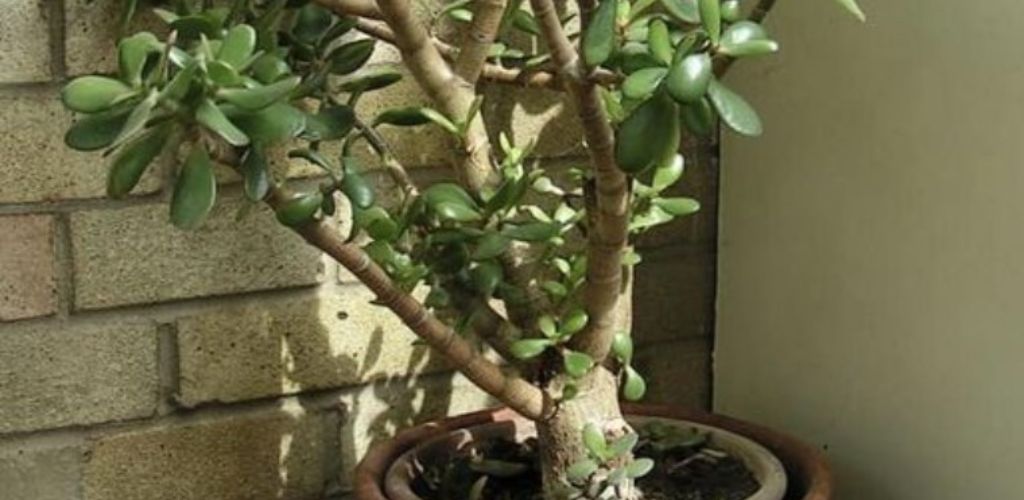
The jade tree, also called the money plant, is a low-maintenance succulent that symbolizes luck, wealth, and prosperity. Native to South Africa, this succulent with fleshy, oval leaves is hardy. If you take care of it, it can last for several years! To add a touch of green to your interior, you can successfully plant and care for Crassula ovata as follows, even if you don’t have a green thumb!
Do you like hardy, easy-to-grow houseplants? The Jade Tree may be a good choice for you. If you don’t know how to plant or care for this succulent, we’ll guide you step-by-step in this article.
How do you plant a jade tree? Grow this lucky green plant from cuttings.
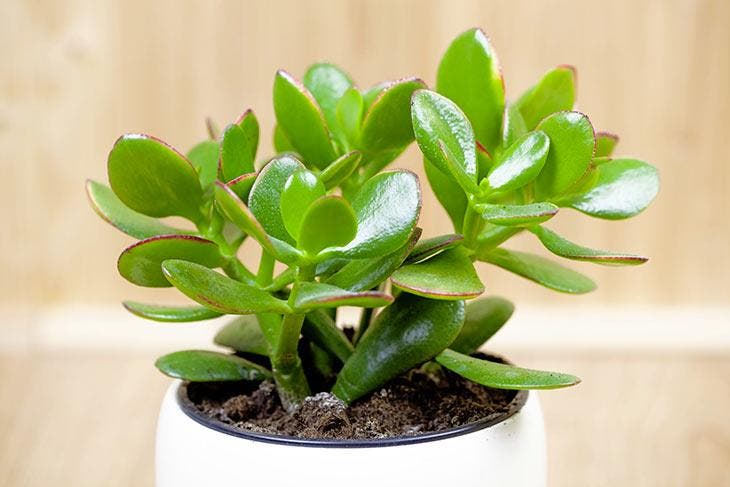
To get new jade plants, simply plant cuttings.
Plant the stem of Crassula ovata
If you know someone who has a large jade plant, you can ask them to cut off a stem to use as a cutting. It’s best to pick a thick stem with healthy leaves. When cutting the stem, use clean pruning shears and make sure to leave a few inches between the leaves and the bottom of the stem. This way, you won’t have to remove the leaves when you plant the cutting. Here are the steps you need to follow to plant the cutting and root it successfully.
- Allow the cutting scar to air dry in a dry place until a thin scab forms on the cut. This way you will get a healthy plant. Keep in mind that the larger the cutting, the longer it will need to dry;
- Spray the stem with a rooting hormone. It is a mixture of plant hormones that promote the growth of cuttings;
- Fill a pot with special potting soil for succulents. If you want to use your own potting soil, no problem! Just try adding a handful of sand to help with drainage. Do not use regular potting soil for your cutting, as it is too heavy for the cutting to take root. Make sure the pot has a drainage hole to allow water to escape;
- Poke a hole in the bottom with a pencil or finger;
- Place the stem in the hole and make sure the rooting hormone is covered;
- Tamp the soil around the stem;
- Place the pot in a sunny location, but not in direct sunlight. New shoots will appear after 4 weeks.
While you’re rooting your cutting, avoid watering it. This can rot the stem and kill your plant. If you want to transplant your Crassula into a larger pot, wait until it has developed roots.
Planting the leaf of Crassula ovata
Instead of the stem, you can also plant a Crassula leaf. Here’s how you can do it.
- Take a leaf with a stem fragment of a healthy, mature Crassula. Without the stem, the cutting cannot form roots;
- Leave the cut in a dry, warm place until it has dried and cured;
- Sprinkle a rooting hormone, also called rooting hormone, over the cutting. This will make the cuttings root better in the soil;
- Plant the cutting in a potting soil that has equal parts soil and perlite;
- Place the pot in a warm, bright place;
After a few days, new outbreaks appear.

How can you successfully care for Crassula ovata?
To successfully care for indoor plants, four parameters must be taken into account: Water, temperature, light and fertiliser.
How do I know if my jade tree needs water?
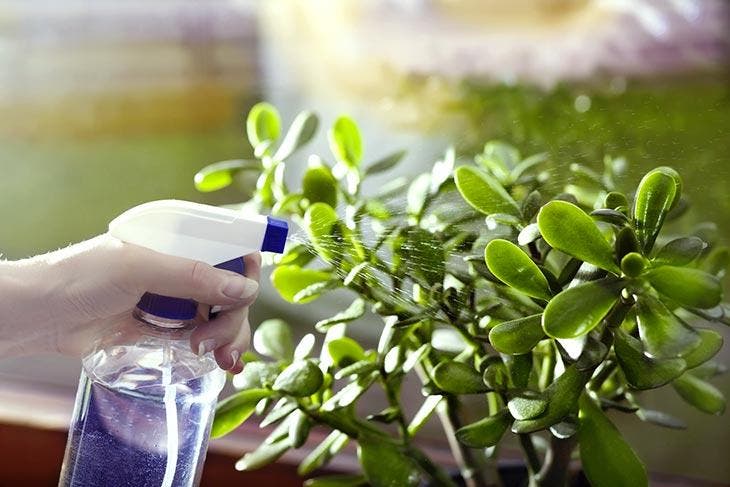
Be careful when watering your plant. Don’t be too picky! If your plant is overwatered, its roots can rot. Watering once a week is sufficient. In addition, succulents are not water-hungry. Its fleshy leaves help retain water. That way they can put up with watering omissions. Limit watering to once a month in winter. If you water your plant from below, remember to remove any excess water from the saucer.
Before watering your plant, first check if it needs water:
- Stick your finger in the dirt. If it still feels damp, don’t water your plant. But if you notice that the soil is dry, hydrate the substrate of your Crassula in this case.
- Check the appearance of the foliage. If the leaves are swollen, it means your plant is overwatered. But if its leaves are wilted, it means that your plant is lacking water and therefore needs to be watered. Choose lime-free or filtered water. Tap water contains salts and minerals that can harm your plant.
According to gardening expert Madison Moulton, healthy leaves are green, shiny, and plump. If the edges start to look wrinkled, it means that your plant has too little water. This is because when the soil is dry, the leaves store little water. This explains the wrinkled appearance of the leaves. This fortune tree certainly grows in warm regions, but keep in mind that even though Crassula doesn’t need a lot of water or frequent watering, it can’t go long without water.
Where to put the lucky tree?
Crassula ovata likes light. In addition, a lack of light can stunt your plant’s growth. Avoid direct sunlight. You run the risk of burning your plant’s foliage when it’s young. Mature plants may develop red tips on their leaves. The jade tree needs partial shade for 4 to 6 hours a day. Place your plant in a bright place. In addition, light promotes the flowering of Crassula ovata. Keep in mind that it’s not easy to get this succulent to bloom. Only mature varieties can flower. If your Crassula is still young, you will have to wait a few years for small white star-shaped flowers to appear.
In addition, the jade tree fears cold and frost. During the day, it prefers a temperature between 18 and 24°C. At night, Crassula tolerates a temperature of between 10 and 13°C.
When should I prune my succulent?
Regular pruning of the jade tree is not necessary. Prune the Crassula if it doesn’t grow evenly or if it’s infested with pests. Pruning can also help your plant grow vigorously. Prune your Crassula in spring, before new growth appears or immediately after flowering.
When to fertilize jade tree?
The jade tree only needs to be fertilized once a year. In winter, Crassula enters a vegetative dormant phase. When plants are in a vegetative dormant phase, their growth slows down. Then they can get by without fertilizer. The plant’s growth continues into spring. However, fertilize your plant during its vegetative growth phase. This lasts from early spring to early fall.
Should Crassula be replanted?
As the jade plant grows, so do its roots. The pot can then be tight for your plant. Hence the usefulness of transplantation. In addition, young plants need to be repotted every 2 to 3 years and older plants every 4 to 5 years. To do this, it is recommended:
- Transplant the Crassula into a slightly larger pot than the initial one.
- Use cool, well-drained soil. You can also buy special soil for succulents or cacti. The soil should be neutral or slightly acidic. It must also be drained to prevent moisture stagnation and thus rot.
- Add perlite to the potting soil to promote drainage, or choose a terracotta or clay pot to drain excess moisture.
- Repotting at the beginning of the Crassula growing season, i.e. early spring.
To preserve your Crassula ovata for a long time, keep an eye out for mealybug infestations on your plant’s foliage as well. It is these pests that the Crassula fears the most. Mealybugs usually take up residence under the leaves of the jade tree. You can remove them with a cotton swab or cloth dipped in rubbing alcohol.
Thanks to these handy instructions, you will be able to plant and care for the ivy. This houseplant will develop healthily and even last a long time!