Frankly, orchid care is more of an art than a science. Fortunately, this task becomes easier when you start learning about the nature of these beautiful flowering plants. Firstly, Orchidaceae are usually grown in bark or moss chips instead of potting soil like most other houseplants, which is the first indication that they have special needs, including watering. And as with any plant, it’s crucial to know how to dose the amount of water you take in. So, here’s how to water an orchid to encourage healthy growth and make it bloom again!
How to water an orchid so that it thrives?
As you probably already know, the most common types of orchids grown as houseplants come from tropical regions. However, this doesn’t mean that they like constant excessive humidity. At the same time, they are epiphytic, which means they grow on other plants without parasitizing instead of growing on the ground in the soil. This means that their roots work a little differently than other houseplants and explains why Orchidaceae don’t like to grow in regular potting soil. Because their roots need air (they can even photosynthesize like leaves!), they dry out more easily between waterings. But as is the case with almost any plant, when you don’t know how to water an orchid, it’s better to give it too little water than too much.
How often should Orchidaceae be watered?
Knowing how to water an orchid is useless if you don’t know when to do it… How often orchids are watered depends on a number of factors, including the ambient temperature and humidity, the amount of light the plants receive, the substrate, and even the type of container they grow in. Instead of watering on a schedule (e.g., every Saturday), it’s best to look for some clues that your orchid needs water.
Knowing if it’s time to water is essential
The first step is to make sure the substrate is already dry before introducing a new dose of water. To do this, push your finger into the bark (or moss) to the first phalanx. If you prefer, use the tip of a sharp pencil, chopstick, or wooden skewer to perform this test and if the wood darkens due to moisture, do not water.
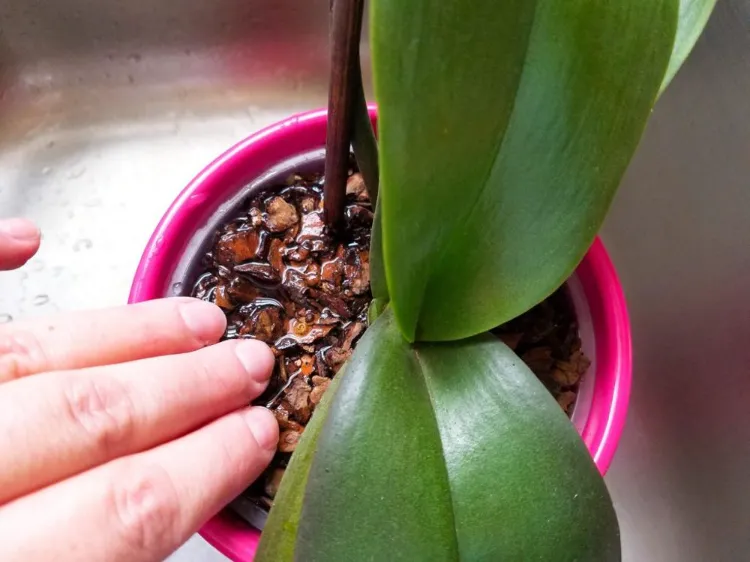
It’s also best to water orchids in the morning, so that any splashes on the leaves have time to evaporate. In the event that water gets in and accumulates at the base where the leaves meet the stem, it could cause rot. Then, if this is the case, wipe off any remaining droplets with a soft cloth or paper towel.
How to water an orchid grown in bark
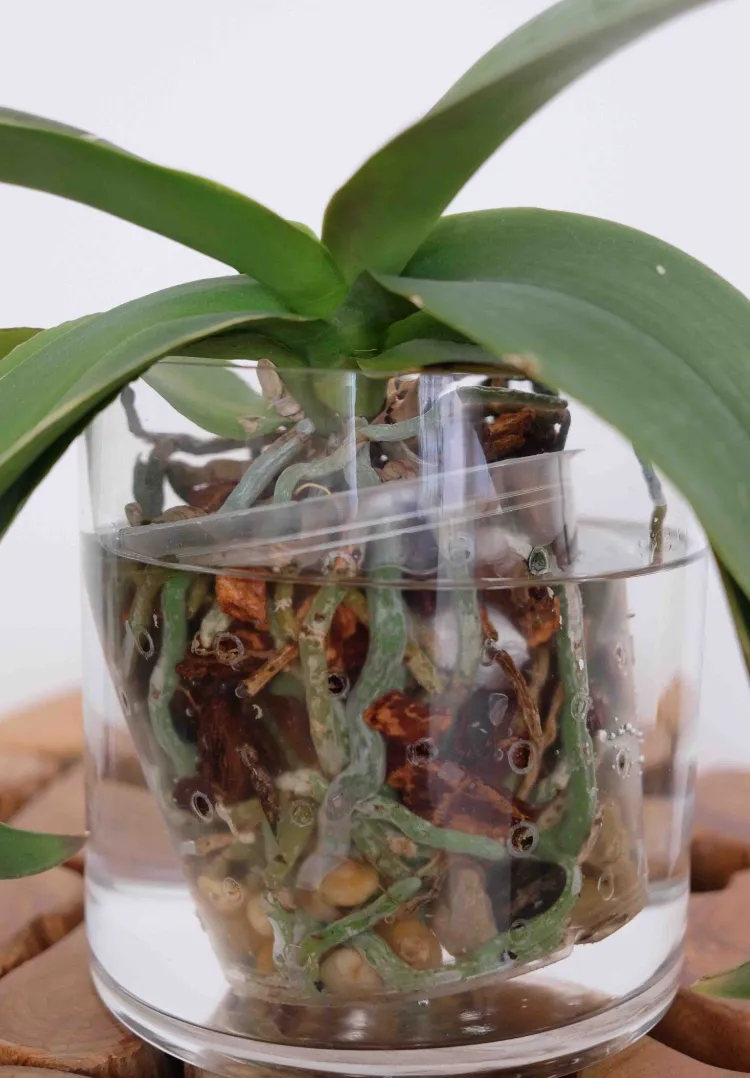
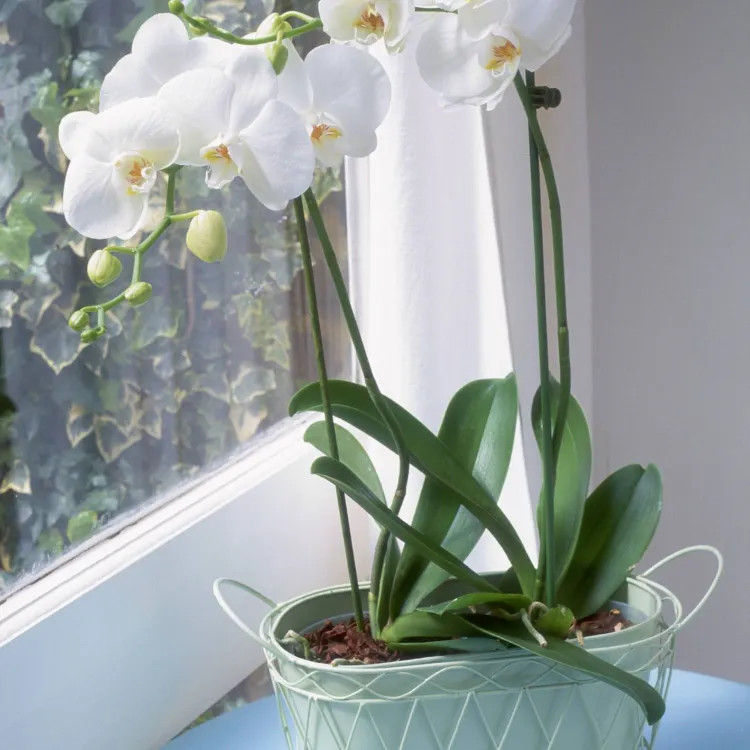
The goal being to saturate the pieces of bark with water, traditional watering is not effective enough for Orchidaceae. The best way to water orchids potted in bark is therefore to place the entire pot in a deep bowl. Then place it in the sink and pour water over the bark so that it fills the bowl to the rim of the pot. If you put the water in the bowl first, you risk pushing the bark out of the pot when you lower it into the water. Leave the container to soak for about 15 minutes so that the bark soaks well. Then take out the pot, let the excess water drain completely and return your orchid to its usual place.
The Best Way to Water Potted Orchids in Moss
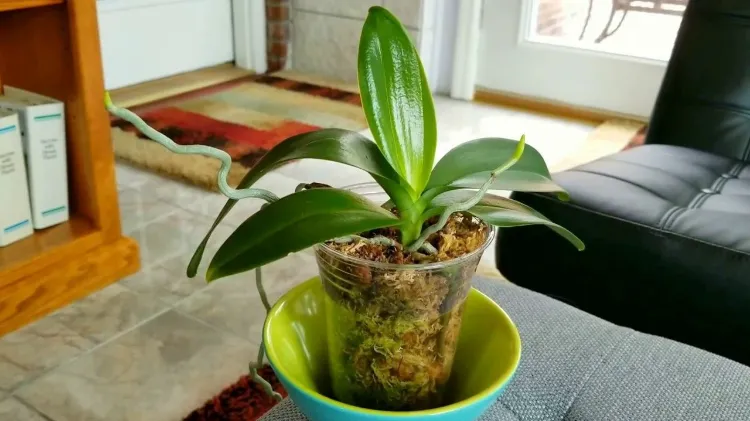
As for orchids that grow in sphagnum moss, you can water them from above, while watering the rest of your houseplants. However, you may find it easier to soak the orchids in the sink or basin to give the moss enough time to rehydrate. Sphagnum moss, which retains moisture longer than bark chips, may appear dry on the surface, but still be wet inside the pot, so do the test with your finger or wooden skewer. Keep in mind that it’s even easier to overwater orchids if they’re in a plastic, glazed ceramic, or glass pot because they hold water longer than clay pots. If you see brownish or spongy roots, you should definitely stop watering.
What water to use to water orchids?
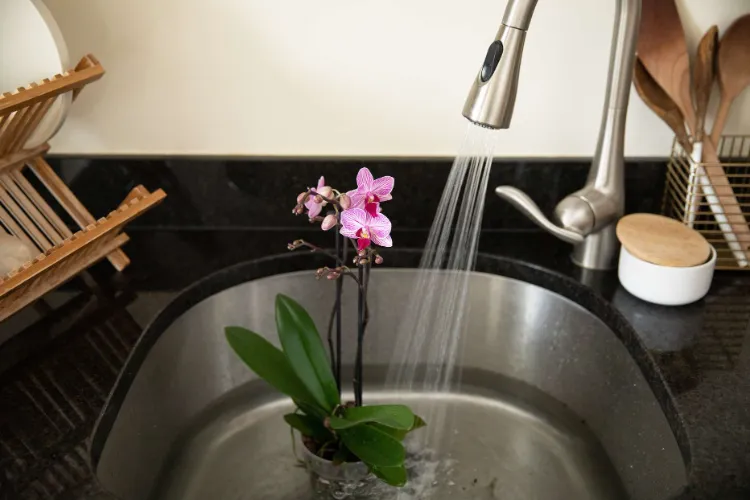
Did you know that rainwater (or melted snow) is best for many plants, including orchids? The reason for this is that it contains some nitrogen (an essential nutrient for plant growth) and is chemical-free. However, it is not essential for your Orchidaceae to grow and bloom, and you can safely use ordinary tap water.
How to water an orchid to make it bloom?

Water at room temperature is preferable, but you can also water your orchid with ice cubes without damaging it. To do this, place two or three ice cubes on the substrate without them touching the leaves. As the ice melts, it will provide moisture to your flowering plant. In addition, misting is not necessary. If you’re wondering how to water a deflowered orchid to make it bloom again, try the homemade banana peel fertilizer method, and you won’t be disappointed!