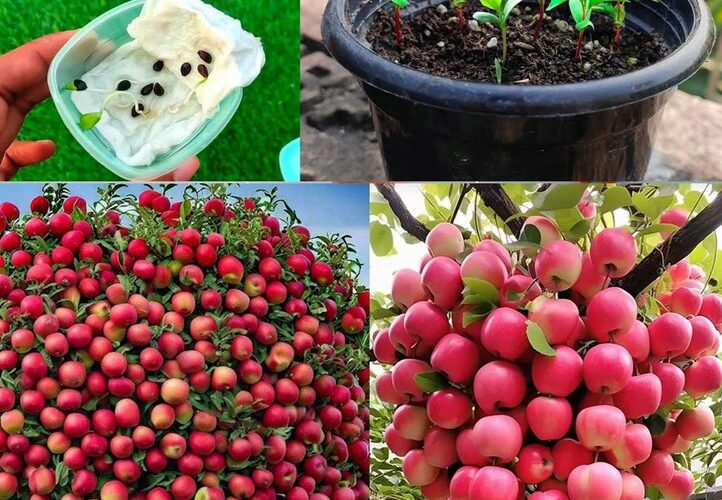
Growing an apple tree from seed is a rewarding adventure that requires patience and care. Here’s a step-by-step guide to help you succeed and enjoy fresh apples all year round.
Selecting and Preparing Seeds
Choosing apples
Start by choosing quality apples. Opt for organic varieties to avoid seeds treated with chemicals. Local apples adapted to your climate are also a good choice.
Seed extraction and drying
- Extraction: Cut the apple and remove the seeds.
- Cleaning: Rinse the seeds to remove any remaining pulp.
- Drying: Spread the seeds on a cloth or absorbent paper and leave to dry for a few days.
Seed stratification
To mimic the winter conditions necessary for germination, place the seeds in a plastic bag with damp sand. Leave them in the fridge for 6 to 8 weeks. This cold period is essential to break seed dormancy.
Germinating seeds
Prepare containers
Use small pots filled with light, well-drained potting soil. Make sure pots have drainage holes to prevent water build-up.
Planting Seeds
- Planting: Plant each seed about 1 cm deep.
- Watering: Water lightly to moisten the soil without soaking it.
- Lighting conditions: Place pots in a bright spot away from direct sunlight.
Care during germination
Keep the soil slightly moist and maintain a constant room temperature. Germination may take several weeks. Be patient and watch for the first shoots to appear.
Transplanting seedlings
Soil preparation
Choose a sunny spot with well-drained soil. Amend the soil with compost to enrich nutrients.
Planting seedlings
- Spacing: Plant the young apple trees about 4 to 5 metres apart.
- Planting hole: Dig a hole wide and deep enough to accommodate the roots without bending them.
- Planting: Carefully place the seedling in the hole, fill with soil and pack lightly.
Care and maintenance of young apple trees
Watering
Water regularly, especially during dry spells. Make sure the soil remains moist but not soggy.
Mulching
Apply a layer of mulch around the base of the trees to conserve moisture and reduce weeds. Avoid touching the trunk directly with the mulch to prevent disease.
Pruning
Prune apple trees every year to encourage a strong, airy structure. Remove dead, diseased and crossing branches.
Fertilization
Fertilize in spring with a balanced fruit tree fertilizer. Follow the manufacturer’s instructions to avoid over-fertilization.
Protection against diseases and pests
Monitoring
Inspect trees regularly for signs of disease or infestation. Aphids, caterpillars and fungal diseases are common.
Treatment
Use biological control methods or treatments adapted to fruit trees to control pests. Horticultural oils and natural insecticides can be effective.
Protective netting
To protect fruit from birds and insects, consider using protective netting during the fruiting period.
Apple harvest
Harvest time
Apples are ready to be harvested when they detach easily from the tree. Color and firmness vary according to variety.
Harvesting method
Pick apples by hand, twisting gently. Avoid shaking the branches to avoid damaging the tree.
Storage
Store apples in a cool, dry place. Long-life apple varieties can be stored for several months.
By following these steps, you can grow an apple tree from seed and enjoy delicious home-grown fruit. Patience and care are the keys to success in this gardening adventure.