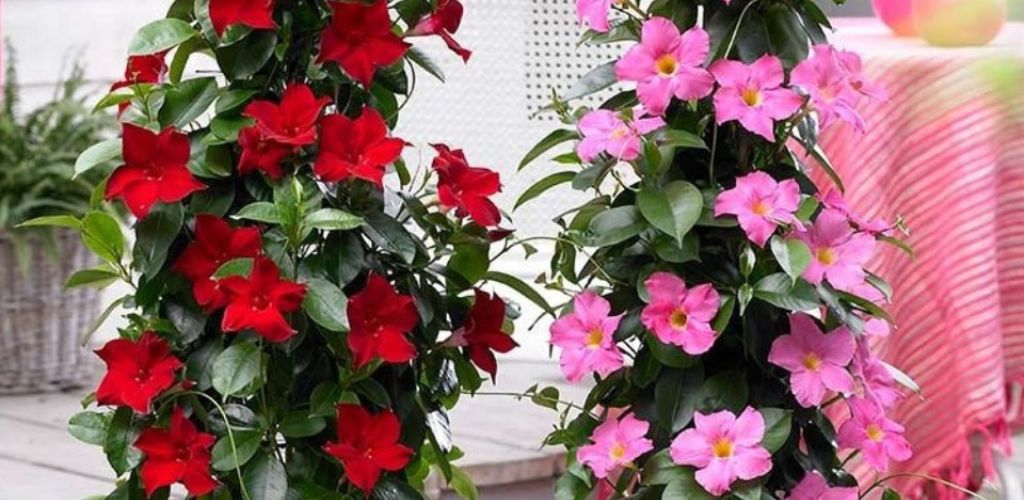
Recognizable by its bell-shaped flowers in shades of white, pink, and red, dipladenia is an ornamental plant belonging to the Apocynaceae family and native to Central American countries. It is a climbing plant, used to beautify terraces and balconies, pergolas and gardens. There are almost two hundred varieties of dipladenia , or mandevilla, some of these are more suitable for indoor cultivation such as dipladenia rosea , while others are more suitable for outdoor cultivation such as dipladenia williamsii.
In any case, the care of this plant is very simple, as long as it is watered regularly in the hottest season, guaranteeing a luminous bearing and mild temperatures.
How to Grow Dipladenia
- 1.Characteristics of the plant
- 2.Climate & Location
- 3.Soil & Fertilization
- 4.When to water it
- 5.Flowering
- 6.Pruning
- 7.Problems & Diseases
Characteristics of the plant
Dipladenia not only stands out for its bell-shaped flowers of generous size (even 5 cm in diameter), but also for its intense and bright green leaves , which do not go unnoticed. Considering its origin, it is not surprising that this plant is a real tropical vine adorned with magnificent flowers and that, by providing it with the right support, it can embellish a corner of the garden or terrace of the house.
Climate & Location
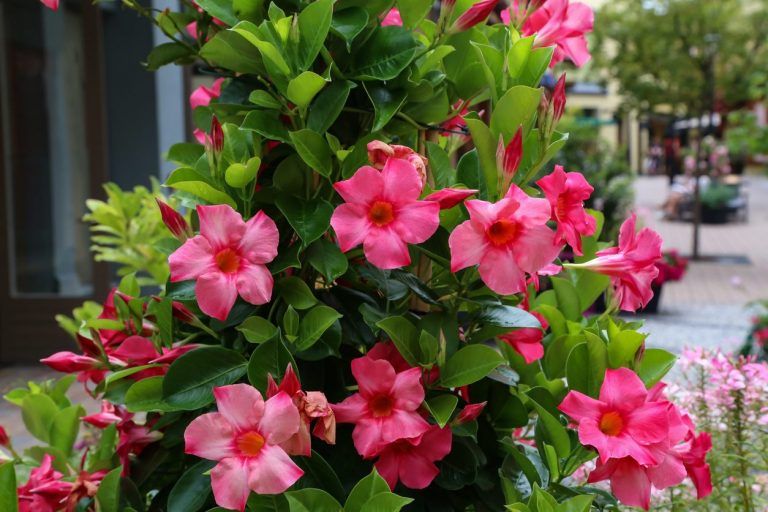
Dipladenia appreciates temperate climate and does not tolerate temperatures that are too low or too high. The ideal temperature to grow is around 21°C, so in summer it is advisable to protect it in the shade if the weather tends to be scorching. In the winter months, however, dipladenia should be stored at a temperature between 10 and 14°C, illuminated with natural light, in a place sheltered from the cold. The best location in which this plant can be placed is in a bright area, both indoors and outdoors, depending on the seasons and temperatures.
Soil & Fertilization
The ideal soil for the proper development of this climber is a mixture of garden soil, peat, sand and leaves. The important thing is that the soil is rich in organic substances, otherwise you can add humus or fertilize in spring and summer.
When to water it
Dipladenia needs to be watered frequently, especially in summer. Let the soil dry out between waterings, without worrying too much about the plant that can tolerate short periods of drought. To ensure moisture, you can put moist gravel on the saucer and spray the leaves with water at the end of the night.
Flowering
The flowering period for dipladenia is in late spring and the good news is that the flowers continue to develop until autumn arrives. Be sure to place the plant in a cool place in the winter, to enjoy plenty of bloom in the summer.
Pruning
Dipladenias should be pruned in the autumn season, in full vegetative rest. Pruning the plant helps to promote the lateral development of branches, leaves and flowers, as well as to give the desired shape to the plant itself.
Problems & Diseases
If you notice that the leaves of your dipladenia are starting to turn yellow and are covered with small dark spots, it could mean that it has been attacked by the spider mite, a mite that can also become harmful if you don’t intervene promptly. a specific product. Another intervention you can do is to increase the humidity of the plant because it is precisely the dry air that favors the proliferation of this mite.
If, on the other hand, you notice whitish spots, the attack probably comes from mealybugs that you can remove with a cotton ball soaked in denatured alcohol or with a specific insecticide if the infestation is already extensive.
If brown spots appear , perhaps the plant has been underwatered or exposed to direct sun. Also pay attention to the hanging leaves: if it happens in the colder season it could be a temperature problem (too low), so move the plant to a more sheltered place.