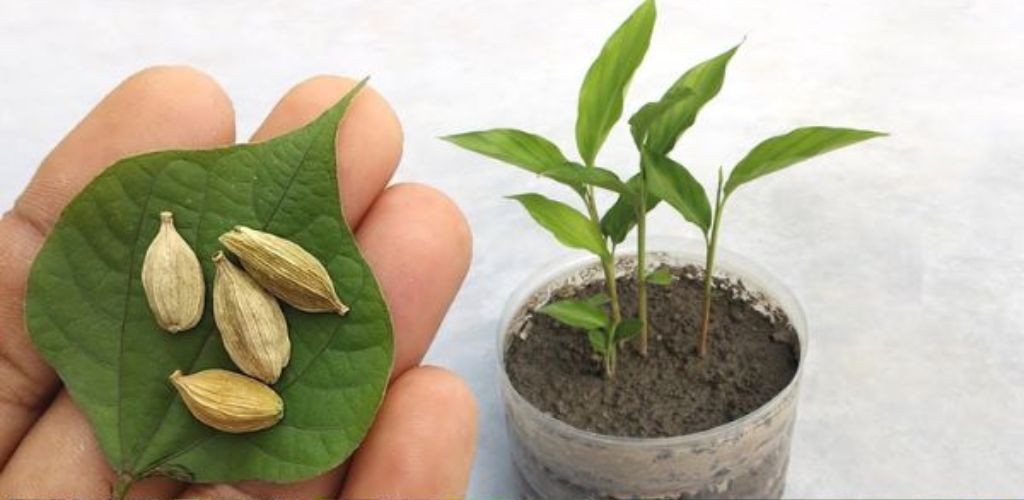
The plants we have at home not only decorate the environment and purify the oxygen we breathe, but they represent us. Those plants that we decide to have inside and outside the home are selected by us for their colors, textures, aromas and in some cases even for their consumption.
Lemon is an exceptional fruit, rich in vitamins and with powerful benefits for both health and our home. That is why today in this article we are going to tell you how to germinate lemon seed so that you can have this wonderful plant in your home and that it adorns your space and fills it with a rich aroma. Hands on the ground!
Take lemon seeds

For this first task you have several options: you can take the seeds you discard from the next lemon you eat and in this way turn your waste into a new chance at life or buy a package with lemon seeds.
Whichever way you get your seeds, you should get a pot or boul to grow them there and some soil to fill the container you choose. Keep in mind that if you decide to use the seeds of a lemon that you have consumed, it is convenient to leave them in water for a while to remove the skin that covers them.
Germinating Seeds

Once you have the seeds ready to plant, you have two possible ways: the first is to place them directly in the boul or pot with soil and place them about 3cm deep from the surface. This method is easier because you won’t have to transplant when the seed has already germinated.
The second possible way you have is to put a thin layer of damp cotton in a cup, on top of the seeds and on top of them another thin layer of damp cotton. If you choose this method, you can have more controlled humidity and temperature. Once the seeds germinate, you should take them to the boul or pot with the soil.
How long does it take for my lemon plant to germinate?

Lemon plants, as we mentioned before, are great for their healthy characteristics and are also ideal for helping to clean and perfume the house or space where you place it, but they will make you wait a while.
The seed takes about 5 to 8 days to germinate, depending on the method used. And then for the development of its growth it will vary depending on the living conditions you give it, the humidity that the land possesses, the temperature where you plant it, among other variables that we will describe soon.
How Should I Care For My Lemon Plant?

Lemon, like all citrus fruits, has special but very simple care. If you want to have it in the comfort of your own home, we will tell you how to treat it to keep it in optimal condition:
Floor
The soil where you have your lemon tree must be permeable and aerated . The lemon plant needs a lot of water but it needs soil that can absorb it in the best possible way. If over time your lemon tree moves to a larger pot to give it more room to grow, remember to give it depth so that its roots can stretch and it can grow strong.
Temperature
The lemon plant is one of the most sensitive to cold and that is why it must be cared for at low temperatures. Lemon feels most at home in Mediterranean climates where temperatures generally hover between 15 and 25 degrees.
Irrigation
Humidity is another very important factor to take into account and control in your lemon plant because it needs a large amount of water. If you get a good potting soil with aeration and fluidity, you will be able to interpret your plant more easily. It is important to water slowly to allow it to absorb and not flood, and that the soil remains moist at all times.
Passage
Compost is another important part when it comes to caring for your lemon tree. If you transfer it to a larger pot, you can put some compost or earthworm humus fertilizer on the bottom, before transplanting it. You can do this once a year or every 6 months. This will give great organic richness to the soil and improve its growth and production.
pests
The lemon tree usually contracts different types of pests that if you know them you can prevent them. One of them is mealybugs, which are small white bumps that you can see on the stem, branches, and leaves. Others are aphids that hit the leaves more strongly and begin to curl them until they dry out and fall off. There are different types of treatments for these pests. It is important that if we see any of them, they go to our trusted nursery and ask for a recommendation to treat and prevent them.