
Hardy, undemanding and easy to grow, orchids are very popular plants and are a hit with houseplant lovers. However, they can wither and die if not cared for properly. Unfortunately, an orchid with no flowers or with withered, limp leaves is much less decorative and pleasing to the eye.
To remedy this, there is a trick to bring your orchids back to life and bloom again. Instead of throwing away your favorite plants, you can revive and care for them, as Martin Davesne, a florist in Hauts-de-France, explains.
How to revive an orchid so that it blooms again?
In order for your orchids to last as long as possible, you need to take good care of them. These houseplants with white, yellow, or even blue flowers are very sensitive to cold. Even if they don’t require much attention, it sometimes happens that these flowers wilt depending on their variety and season. To revive your orchids, you can simply adopt this trick. It will allow you to save your houseplant without needing to buy another one.
- Cut off the stems of your withered orchids
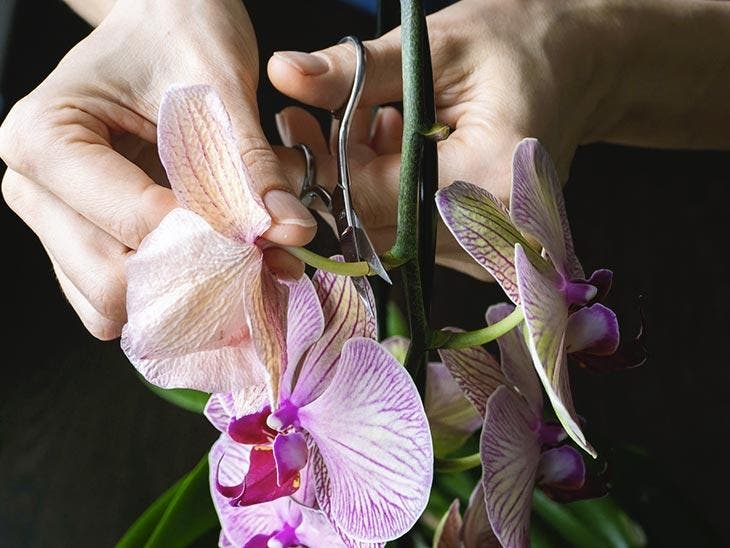
To save your orchid, you should first remove all wilted flowers and let your plant rest for a few days before starting the procedure. Position yourself using the base of the orchid, count two shoots, then cut off one of the stems an inch above the third shoot and below the stem so that your orchid has good growth again. In addition, it will encourage the production of new flowers. After a while, a first bud should appear accompanied by small shoots. Later, after 2-3 months, a second bloom may occur. If you follow this advice to the letter, your orchids could, in fact, continue to bloom for another three to five years.
Here are some other tips to get your orchid back in bloom
For growing your orchids, you should pay attention to their maintenance, as they don’t like heat and prefer humid environments.
- Keep your orchid in a place at the right temperature
After pruning your orchid with sterilized pruning shears, you should place it in a place away from heat. Your flowering plant should be placed at a temperature of 15°C (make sure the temperature does not drop below 13°C). When spring comes, when the frost passes, you can put it outside. The outside temperatures during the months of May to September won’t hurt your orchids.
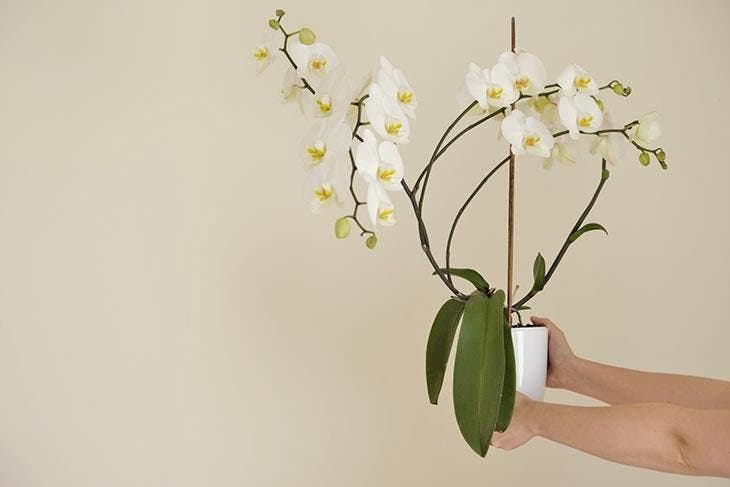
- Water your orchid with a little water
Orchids need water and a constantly humid environment for proper maintenance. In the summer season, these plants need to be watered every week. When temperatures are colder, it is advisable to water them every ten to fifteen days. It’s best not to overwater an orchid, as it doesn’t tolerate overwatering. Of course, if the soil is still wet, it is not necessary to rehydrate it.
- Repot your orchid so that it blooms properly
Orchids should be repotted every two to three years. to have good growth. If you notice the roots sticking out of the pot, it’s a sign that your plant needs more space to thrive. Otherwise, you can also proceed with the operation if you see that the roots of your orchid have mold. This may be due to overwatering. First of all, to install your flowering plant in a new pot, you need to make a new substrate with sphagnum, pine bark, and clay balls. Then, slightly moisten this solution and remove the orchid from its pot to remove the substrate around the roots. Finally, remove the old flat roots and keep only the sap-filled ones. In your new pot, place the new substrate, place all the roots inside, holding the orchid by the base and fill the container with substrate, taking care to put some between the roots. Tamp everything down well and place a stake if necessary to support your plant.

If your orchid is no longer blooming, know that there is nothing alarming about it. Just follow the tips presented above to revive it!