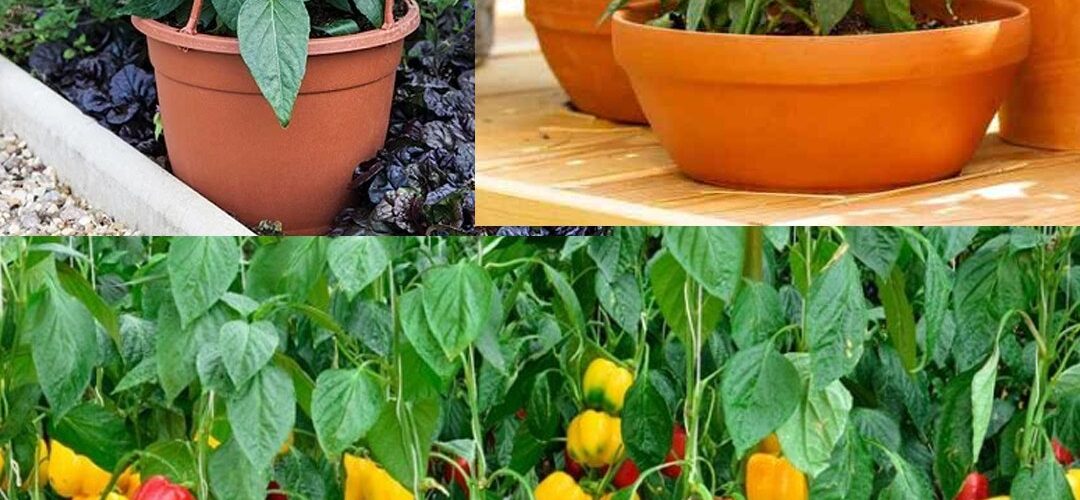
Growing peppers from seeds in pots or containers is a rewarding and convenient way to enjoy fresh, crisp peppers at your fingertips. Whether you prefer sweet or hot peppers, container gardening allows you to grow them even in small spaces. Here is a complete guide to growing peppers in pots or containers from seeds.
Step 1: Choose the right pepper varieties
- Select suitable varieties that adapt well to container growing. Dwarf or compact varieties are usually best, as they require less space to grow.
Step 2: Select the appropriate container
- Use pots or containers at least 30 cm deep and with good drainage holes. Larger containers retain more soil and moisture, which is beneficial for plant growth.
Step 3: Use a high quality substrate
- Fill the pots with a nutrient-rich, well-draining mix. Avoid using garden soil as it may be too dense and contain pests and diseases.
Step 4: Plant the seeds
- Sow the seeds about 5 cm deep in the soil. If you plant several seeds in the same pot, space them at least 5 cm apart. Water the soil gently to keep it moist but not waterlogged.
Step 5: Germination
- Place the pots in a warm, well-lit location. Pepper seeds germinate best at temperatures between 70°F and 90°F and typically sprout in 7-14 days, depending on the variety and growing conditions.
Step 6: Thin and transplant
- Once the seedlings have developed two sets of true leaves, thin them out, leaving the strongest plant in each pot. If the seeds were sown in small containers, transplant them into larger pots at this stage.
Step 7: Water and fertilize
- Water the peppers regularly, allowing the first centimeter of soil to dry between waterings. Overwatering can rot the roots. Feed plants with a balanced, water-soluble fertilizer every 2-3 weeks, or as recommended on the fertilizer container.
Step 8: Sunlight
- Peppers need at least 6-8 hours of sunlight daily. If you are growing them indoors or in an area with limited sunlight, consider using grow lights to supplement their light needs.
Step 9: Pruning and Support
- Pruning pepper plants promotes bushier growth and higher yields. Remove lower leaves and weak or diseased branches. Support them with stakes or cages to keep them upright, especially when they begin to bear fruit.
Step 10: Pest and Disease Management
- Regularly inspect pepper plants for pests such as aphids, spider mites, or whiteflies, and treat them immediately with insecticidal soaps or neem oil. Prevent fungal diseases by avoiding overhead watering and ensuring good air circulation around the plants.
Step 11: Harvest
- Harvest peppers when they reach the desired size and color. Using scissors or pruners, cut the peppers from the plant to avoid damaging the branches. The more you harvest, the more peppers the plant will produce.
Growing peppers in pots or containers from seeds is enjoyable and effective, especially for those who have little space. By choosing the right varieties, caring for them well, and effectively controlling pests and diseases, you can ensure a bountiful harvest of fresh, flavorful peppers to season your culinary creations. Whether you’re a novice or experienced gardener, growing peppers can give you a sense of accomplishment and improve your connection to the food you eat.