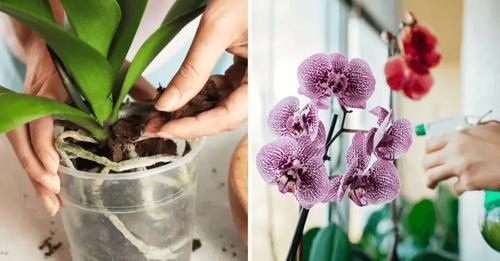
Since time immemorial, the orchid flower has symbolized love, charm and sensuality. Therefore, having orchids as a houseplant will bring a touch of romance to your home, along with exquisite colors. Indoor growing is not always easy, so it is necessary to know the conditions that will help you grow your orchid to enjoy its beautiful flowers. We tell you everything in this article.
Orchids are tropical plants with exotic flowers that can take on pink, purple, blue or even white. These plants are hardy and some varieties like Phalaenopsis, also called Moth Orchid, are easy to grow indoors. It is enough to know the transplant, exposure and watering conditions that orchids require.

Orchids – Source: spm
Transplant
It is advisable to carry out a first transplant after purchasing your orchid. This will allow you to inspect the roots and check for signs of disease or pests. To do this, carefully remove the orchid from its pot and run its roots under water to easily remove them from the substrate, but also to make them more flexible and less fragile.
Then remove the dead and devitalized roots. To recognize them, just apply simple pressure on the roots with your fingers. If the root is firm it is still alive, if on the other hand it is soft, it means that it must be pruned. This trick will allow you to distinguish between dead roots and the aerial roots of your plant that are still useful.
Now you can repot your orchid and put it in another larger pot, so that the plant has room to develop its roots. You can use a clear plastic pot to easily check the condition of your plant’s roots. If you are bothered by the aesthetics of your pot, you can choose a planter for it.
All you have to do is add your new growing medium. Be sure to choose special potting soil for orchids. This consists, among other things, of a mixture of coconut fibers, charcoal, bark mulch and clay balls. This substrate ensures the aeration and nutrients that your plant needs.
Repot your orchid when the soil seems depleted, usually every 2 or 3 years. You can also use a liquid fertilizer once a month, and more regularly during the flowering period, but don’t overdo it. Too much fertilizer can cause your orchid to stop blooming.
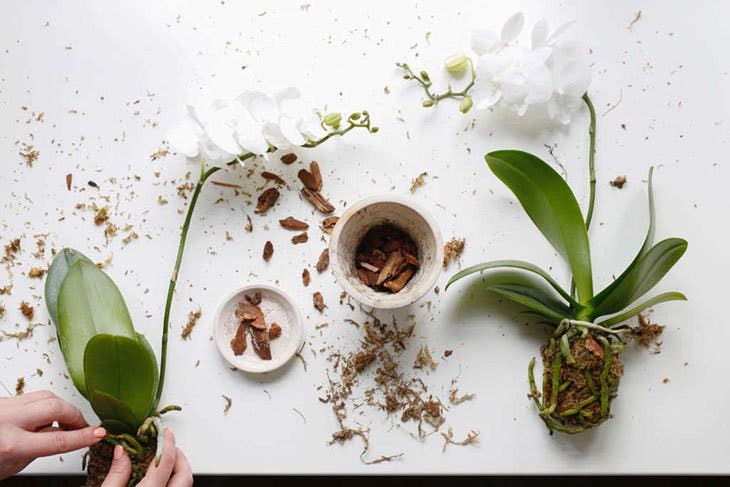
Orchid transplant – Source: spm
Exhibition
Orchids are houseplants that like bright, bright rooms. Keep them in bright rooms, but prefer filtered light, as direct sunlight exposure could burn their leaves.
Also, orchids do not like cold climates, so keep them at a temperature between 18°C and 25°C, otherwise they will not bloom. Also keep them away from drafts and heating equipment such as radiators.
irrigation
It is recommended to water orchids regularly, especially while they are growing. A weekly watering is sufficient. Make sure to water them, but not excessively so as not to suffocate them and encourage the appearance of fungi . To facilitate watering, submerge the pot in a container of water for 5 to 10 minutes. Then drain the pot in the sink and remove any standing water in the pot. Also remember to moisten the foliage of your plant with a spray bottle.
Water your plant again only when the roots and soil are dry and prefer room temperature water. Hot or cold water could damage the roots. Also, the orchid does not like hard tap water, so water it with rainwater or filtered water.
Also, monitor your plant for signs of dehydration. In fact, for some types like Phalaenopsis, the roots turn gray when dehydrated.
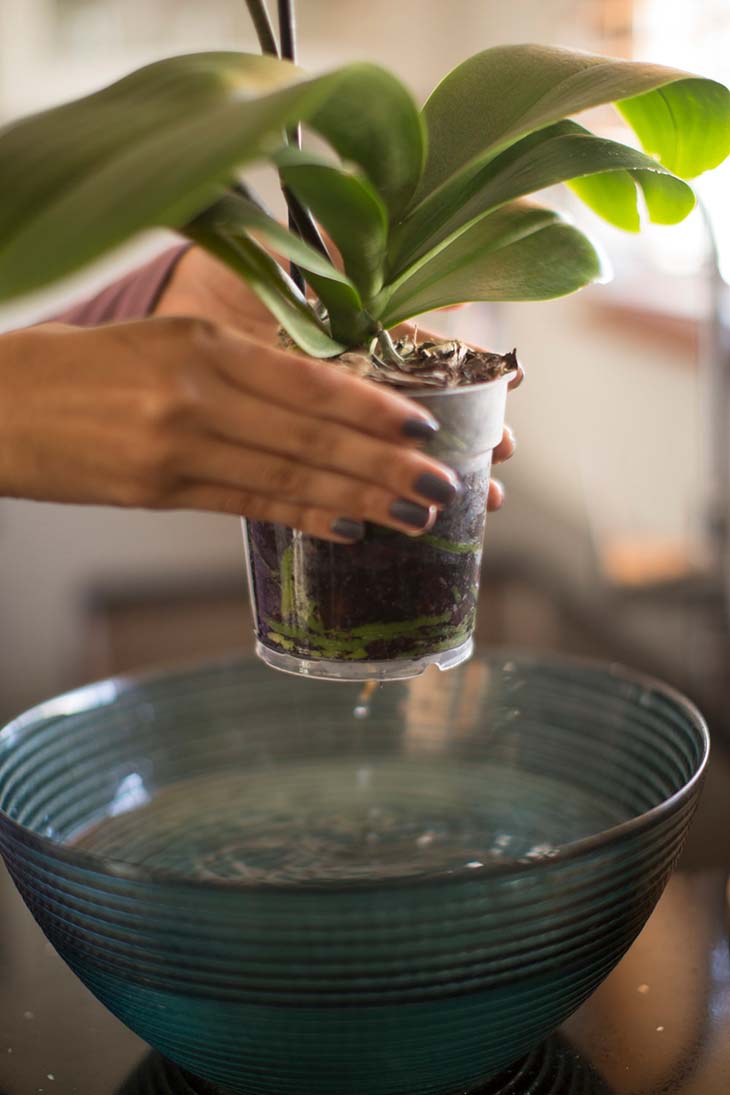
Orchid watering – Source: spm
And for your orchid to last a long time, it is important to be aware of diseases and insects that can affect it.
Diseases and parasitic insects
Some insects can parasitize the growth of your plant and feed on its sap. These include mites, whiteflies, aphids and even mealybugs which can weaken your orchid. To fight against these insects that plague your plant, you can use black soap or onion juice that act as a natural insecticide.
Additionally, when indoor growing conditions are not suitable for your plant, i.e. exposure, temperature and watering conditions, the orchid may be affected by certain diseases. Examples include botrytis, which causes gray rot to form on flowers, or even anthracnose, which causes black spots to appear. Do not hesitate in this case to remove the damaged parts of your plant.
So, even if you are not lucky enough to have a green thumb, thanks to this little guide you will be able to take care of your orchid and enjoy its beautiful flowers.