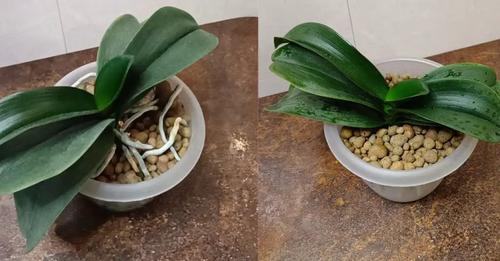
The orchid is an amazing plant. With the diversity of its shapes and colors, it finds its place everywhere in the house, providing a touch of elegance to our interior. Sensitive to watering, it can quickly lose its charm and wither. Discover the 4 rules you should know in September to ensure healthy and long-lasting flowering even in winter.
An exotic plant from the tropical regions of Southeast Asia, the orchid grows high on the branches and absorbs a large amount of moisture. Unlike plants that have the soil as their main habitat, the orchid requires special irrigation that must perfectly cover its needs.
What are the watering rules to follow to get beautiful orchid flowers?
Irrigation is a crucial step in the care of plants, especially orchids, since it requires in-depth knowledge of the frequency and methods of watering, as well as the nutrients essential for their correct development. These are the rules to follow for a successful flowering of your orchids.
- Master the technique of watering orchids.
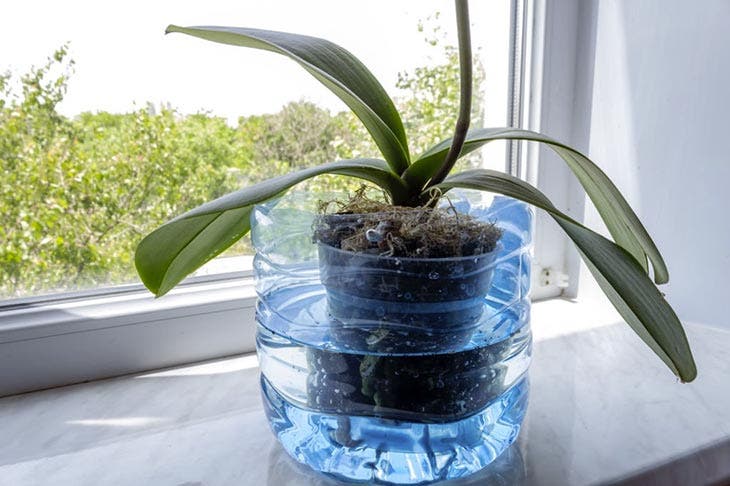
The most effective technique for watering orchids is to submerge the pot in a container of water for about fifteen minutes , the amount of time the roots can absorb the water without touching the core. Once this time has elapsed, let the jar drain before placing it back in its place. Unlike other plants, orchids cannot tolerate being watered from above or remaining in stagnant water for too long. As it appreciates humid environments, it is possible to spray non-calcareous water on its leaves, especially during the warm season. A layer of clay balls and water can be placed under the pot to preserve this moist environment.
- Use appropriate water to water orchids.
The orchid especially appreciates rainwater. Softer, it is perfect for this tropical plant. However, it is advisable to collect and store this irrigation water inside your home at room temperature. Temperature changes can be detrimental to their development. Another alternative to rainwater: add a few drops of lemon juice to tap water. This method removes lime from the water.
- Adopt the correct orchid watering frequency
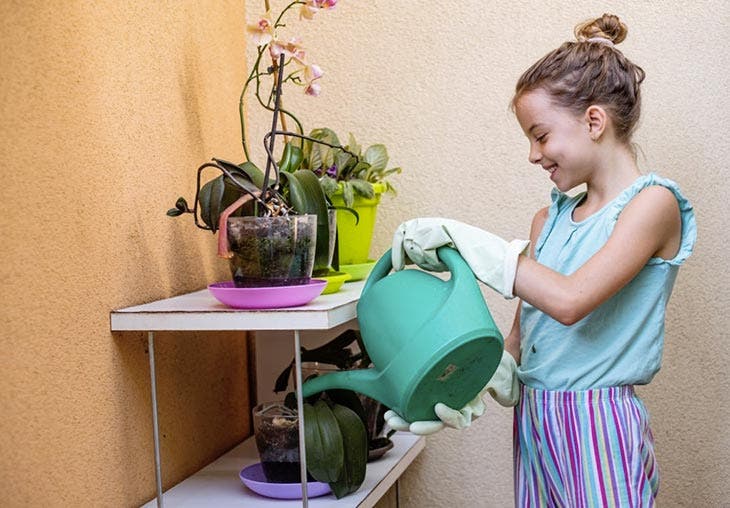
The frequency of watering the orchid depends on two important criteria. First, the temperature of the room in which the plant is located but also the stage of its flowering. In addition, you must also take into account the composition of the substrate in which the orchid is planted, since it can dry out faster depending on its volume compared to the roots of the plant. As a general rule, watering weekly, or even every 10 days, will be sufficient during the flowering period indoors with a temperature between 17 and 24°C. After this period, it is recommended to water every 15 days or 3 weeks.
- Add specific fertilizers when watering orchids
To grow, it is not necessarily mandatory to feed the plant with fertilizers, especially commercial ones. Rather, it favors nitrogen for the growth of its foliage and potassium for faster growth of the stems. To provide these nutrients to your plant, mix the fertilizer at the time of watering, respecting the indicated doses. This technique is highly recommended when outbreaks appear.
Some mistakes to avoid when watering orchids
Orchids are very sensitive plants. Therefore, you must be very careful while remaining alert on a daily basis. Some errors can be fatal and compromise their development or even kill them. Here are some examples.
- Do not check the orchid substrate before watering
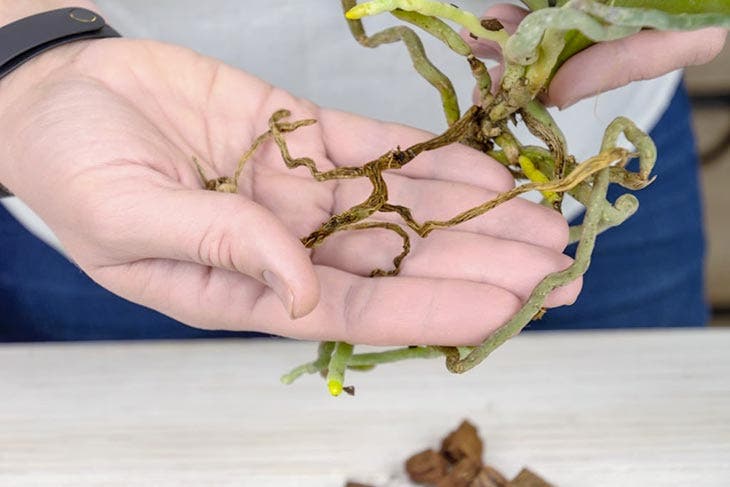
As you may have understood, it is not advisable to overwater when maintaining your indoor plant. Before taking out the watering can, check that the substrate is very dry on the surface, between two waterings. You can see this by pushing your finger into the soil about 2cm deep. On the other hand, the roots should be gray and opaque.
- Water orchids in full sun
Although this plant appreciates light, it cannot be exposed to the sun for a long time. That is why it is preferable to water it in the morning and keep it away from the sun’s rays that can burn it, especially during the summer. It is recommended to mist orchids about 3 times a week, or even daily if necessary to avoid the effects of heat.
For radiant orchids, there is nothing like proper watering. These little tips will prolong its lifespan and ensure long-lasting healthy growth.
Finally, during cold periods, consider placing your orchid in front of a window (indoor) in direct contact with the sun.