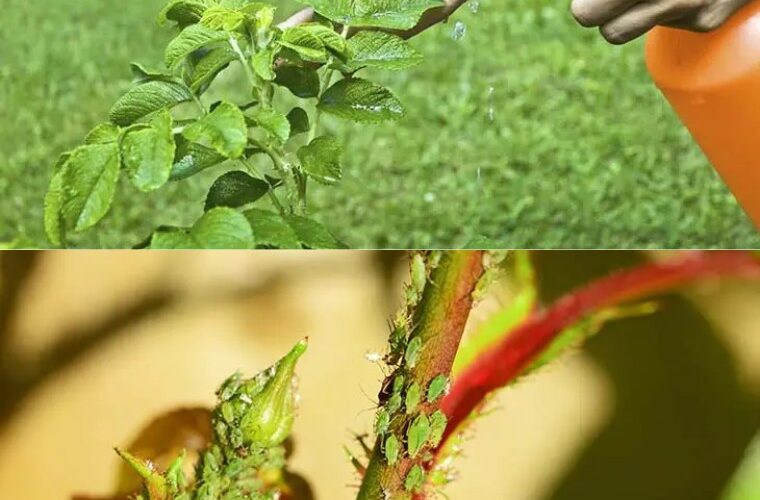
Plants grown in pots or in the ground have a common enemy: insects. These parasites can devastate your plants and have unfortunate consequences. That being said, to keep your plants healthy, it is important to protect them from pests and pests. To do this, it is not necessary to resort to chemical insecticides. Some natural and readily available products can be used to make your own insecticide, which is safe for the environment. Discover how to protect your plants from insects with this natural insecticide.
Aphids, mealybugs, whiteflies or red spiders are parasites that can attack your plants and affect their proper growth. To fight these insect pests, you can prepare your own organic insecticide.
How to prepare a natural insecticide to keep plants healthy?
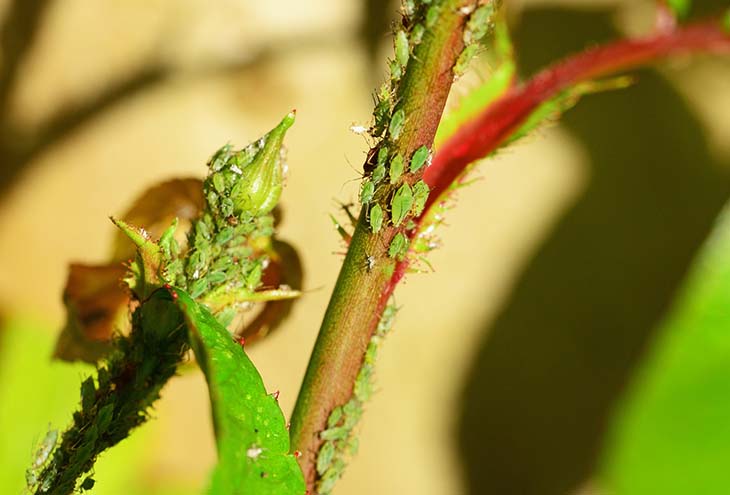
To make a natural insecticide, you will simply need Marseille soap. This ecological and biodegradable product is effective in controlling psyllids, red spiders, leafhoppers, aphids, scale insects and whiteflies. Indeed, Marseille soap clogs the respiratory pores of these parasites, in addition to preventing them from reaching the leaves of your plants. To do this, grate 150 grams of Marseille soap and dilute the shavings in a liter of boiling water, in a saucepan, over low heat. Stir well with a wooden spoon until you obtain a homogeneous liquid. Then pour your soapy water into a bottle fitted with a spray bottle.
As it cools, Marseille soap may solidify. If so, you can add some water to your bottle and shake it. It is also important to shake the bottle before each use to dilute the insecticide.
Use this insecticide especially in spring and early summer, as this is when insect attacks are most frequent. It is best to spray your insecticide on the foliage of infested plants at nightfall, avoiding rainy days, so that the insecticide can work well. Don’t forget to spray under the leaves as well, as this is where insects most often hide.
Please note that soap-based insecticides are not suitable for all plants. In fact, plants with fluffy foliage cannot tolerate soap. This is particularly the case with impatiens, or even ferns. Therefore, it is recommended to spray your insecticide on a small part of the plant and wait 48 hours before treating it. This will allow you to see if your insecticide will cause any adverse effects on your plant.
What other products can be used to make a natural insecticide?
Marseille soap is not the only insect repellent. In fact, you can replace it with other natural products.
- Black soap as a natural insecticide
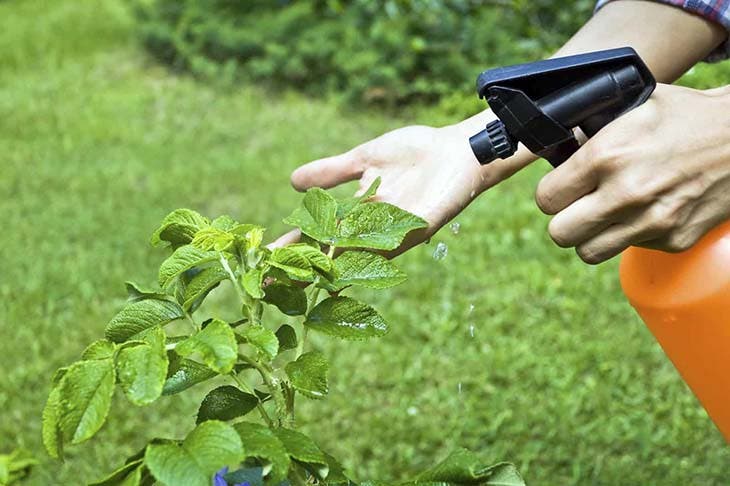
Black soap is very effective in protecting your plants from insects, thanks to its antibacterial and insecticidal properties. To do this, dilute 5 tablespoons of black soap in a liter of warm water and pour your solution into a spray bottle. Then spray on the leaves and stems of your rose bush devastated by aphids or mealybugs. Use this insecticide also to protect tomato plants from attack by green bugs or aphids.
- Natural insecticide with tomato leaves
Tomato leaves are rich in alkaloids that help eliminate aphids. To make this repellent, you will need a teaspoon of natural dishwashing liquid and 80 grams of chopped tomato leaves. Start by soaking the tomato leaves in water for half a day, then mix everything together and then add the teaspoon of dishwashing liquid. Transfer your preparation to a spray bottle and spray on your infested plants.
- Neem oil as a natural insecticide
Neem oil is a biodegradable vegetable oil that acts as a natural insecticide. It is effective in getting rid of insect eggs or larvae and thus stopping their development. To do this, pour 250 ml of water, a teaspoon of liquid Marseille soap and two teaspoons of neem oil. Transfer your insecticide to a spray bottle and spray directly onto the leaves.
Keep in mind that in addition to these natural products, you can also use white vinegar, baking soda, nettle manure or even a garlic decoction to fight against these natural predators that invade your plants. You should also know that certain beneficial insects in the garden can help you naturally eliminate pests that plague your plants. In fact, ladybugs, for example, are known to be good anti-aphids. It feeds mainly on aphids, but can also consume other pests such as whiteflies, mealybugs or thrips.