Botanical sheet of pineapple comosus
Cutting pineapple and eating it in different ways hides many health benefits. The pineapple plant (Ananas comosus) of the Bromeliaceae family, native to South America, is a herbaceous perennial that forms a bush that can reach 1.5 m in height. It has rosette leaves, greenish-gray in color, tapering but prickly at the edges, curved at the end. Its ovoid bluish-pink flowers reach 30 cm long and appear during the summer, protected by orange bracts. Each of these bears a fruit consisting of a flaky rind.
To taste the juicy, sour and sweet pineapple pulp, you must first remove the peel and core. The edible part is rich in vitamins, fiber, iron, potassium, carotenoids and bromelain, a proteolytic enzyme that helps digestion.
Plant and transplant
Pineapple comosus is a plant that needs rich, well-drained soil to grow. Therefore, a special bromeliad soil and a little sand is the best solution.
The pineapple tree develops very few roots, so a small diameter pot (about 15 cm) is sufficient. However, don’t forget to pierce its bottom.
Transplant when you want to separate the suckers.
cuttings
In fact, the pineapple does not contain seeds, since it is pollinated by hummingbirds, so it multiplies more easily by dividing shoots as soon as they reach 20 cm.
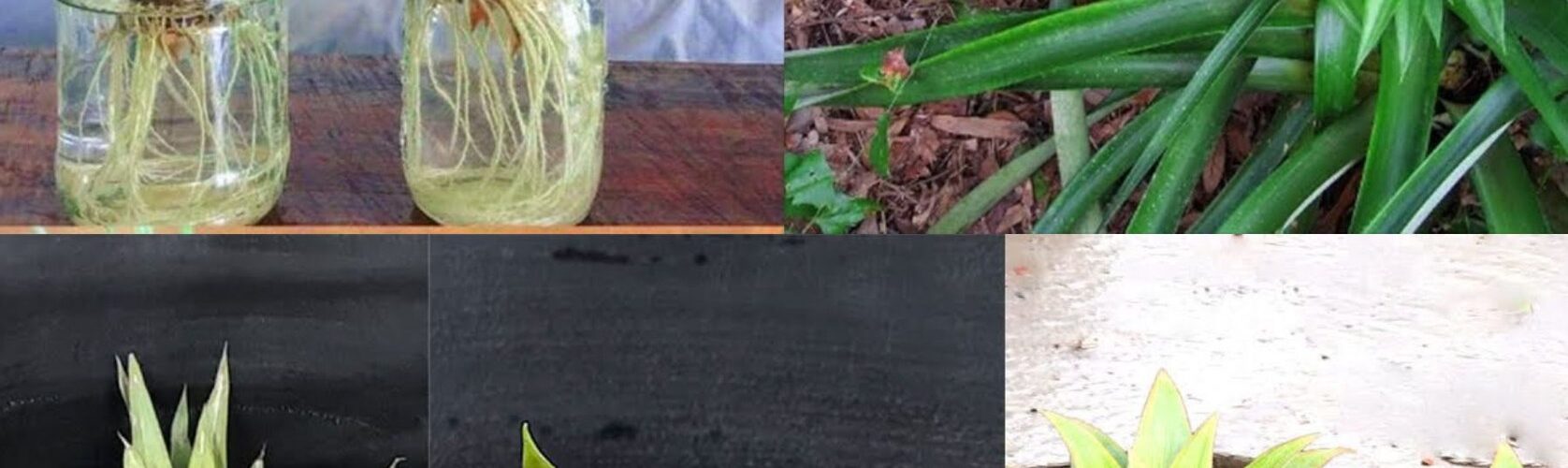
The other possibility is by cutting the crown of leaves that is above the fruit. Cut it cleanly, remove the remains of pulp as well as the first crown of leaves and put it in water. After a few weeks, once roots have formed, plant in a pot containing a mixture of sand and potting soil.
Exhibition
The ananas comosus needs a sunny position but not direct sunlight, and a temperature between 18 and 24°C that should never drop below 15°C.
The plant also requires good humidity. Therefore, in winter, absolutely avoid proximity to a heat source such as a radiator.
During the cold season, place the pot on a bed of clay pebbles or gravel with a saucer constantly filled with water, without the pot being in contact with water. The goal is to maintain air humidity through evaporation.
Irrigation and fertilizer
Regular but moderate watering is necessary for the pineapple tree to grow well.
Spring and summer: Keep the soil slightly moist and bring liquid fertilizer for green plants every 15 days. The water should be at room temperature and as free of lime as possible.
Autumn and winter: reduce watering so that the soil is dry on the surface between 2 waterings. Also reduce the amount of fertilizer to once a month.
Diseases in pineapple comosus
Grown indoors, pineapple is most frequently attacked by red mites, mealybugs, aphids and also by the powdery mildew disease.
If the leaves turn pale or dull, it means that there is a lack of light. If the leaves fall, it means that the air is too dry or too hot. Restore moisture to the foliage, why not, by spraying water on top.
If the plant does not grow much and the pineapple does not grow, it is probably due to a lack of fertilizer.
When and how to pick a pineapple?
Pineapple is a seedless fruit, called syncarpus. Basically, this means that it is produced from the fusion of several flowers into a single large fruit. These herbaceous perennials are easy to grow and are only 0.5-1.5m tall, making them a perfect size for most gardens or interiors.
When the plant produces flowers, it is considered mature and can expect (barring unforeseen complications) fruits in about six months. Although it is fairly simple to grow, it can be difficult to determine when to harvest. Basically, when the pineapple is ripe, the individual “fruits” flatten and the skin begins to change color from green to yellow, starting at the bottom and working toward the top of the fruit.
Color is not the only indicator to collect pineapple. The imminent harvest is announced by the change in color but also in size. Ripe pineapples weigh between 2.5 and 4.5 kg. There are two other things to consider before picking them up. The smell, for example, is a good sign of maturity. It should be different, sweet and sour. Also, touch the fruit. If it sounds hollow, leave it on the plant to ripen further. If it’s solid, it’s probably time to harvest.
When the fruit is a third or more yellow, you can pick it. The same when it is in the late green phase of maturity, or when it is of normal size. You can then ripen the pineapple at room temperature. Don’t refrigerate it until it’s fully ripe, or it may spoil.
To harvest pineapple, simply cut it from the plant with a sharp kitchen knife where it attaches to the stem.