
It is the most beautiful and elegant indoor plant that exists. Beautiful yes, but the fear of not seeing their orchid bloom inhibits many from having one at home. This flower, on the other hand, just needs to find the best location within the four walls of the house. The environment that welcomes it, in fact, should remind it as much as possible of its natural habitat, the tropical one; So it would be ideal to have an orchid in the bathroom or kitchen, but can’t such a beautiful plant make a good impression on a living room table?
Where to place it
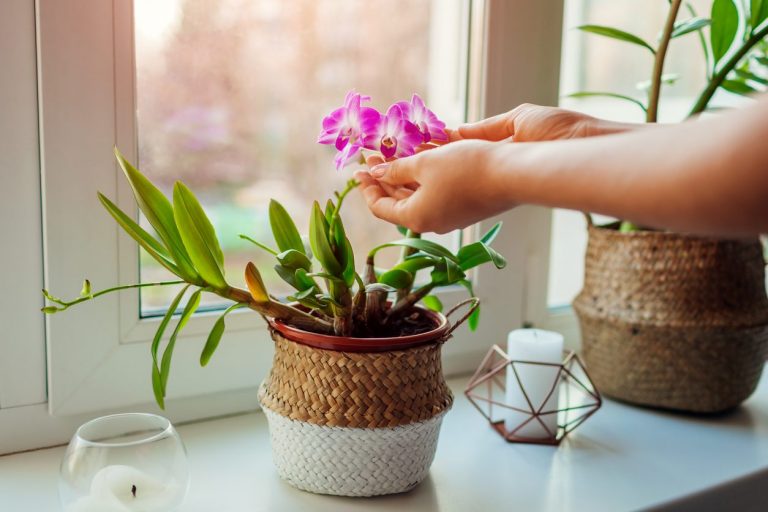
What you can do is first make sure that your plant is away from direct heat sources and drafts and never exposed to direct light. The best location may be near a north-facing window.
Use a transparent vase
Keep the plant in a transparent plastic pot : this way you can observe the development and condition of the plant’s roots; The clear vase also allows the roots to have good sun exposure to ensure the nutrition the orchid needs.
Choose bark chips
Instead of soil, you should use bark chips in the orchid pot , which have the advantage of absorbing the moisture that the roots need. The soil may retain more water than the shavings, but the latter have the privilege of maintaining and gradually releasing the moisture that the plant needs.
How much water?

Instead of watering your orchid, submerge it completely in water once a week; This operation will only reproduce the effect of tropical storms typical of its area of origin. Then make sure that excess water drains from the pot: the orchid should not remain in water after soaking.
Pruning
As soon as you notice that the plant’s flowers have fallen naturally, proceed to pruning . This will allow the plant to resume the flowering process . To make sure you don’t cut too much, check the “nodes” – those little round indentations in the stem – and cut the stems at the third “node” starting from the bottom.
variety of orchids
Each variety of orchid is characterized by flowers and leaves with the most particular shapes and colors. Each variety also has its own characteristics, and in order for them to bloom again, they may need specific care.
phalaenopsis orchids
They are the most common orchids and bloom in winter. To help them bloom again, try cutting the stem above the last node as soon as the flowers begin to fade. After this, add a specific fertilizer that can stimulate flowering. Make sure the plant environment has a night temperature below 13°C.
orchids paphiopedilum
Known as the “Venus slipper” or “slipper orchid,” the Paphiopedilum orchid can give you up to two flowers a year. This type of orchid needs high temperatures throughout the year to bloom again, that is, at least 22°C – 23°C during the day and 19°C at night. Fertilize it in the autumn period with a specific product to stimulate flowering.
cymbidium orchids
Cymbidium orchids, on the other hand, guarantee more flowers all year round. without much effort They need light air (not direct) and quite humid: the strategy is to use a saucer filled with expanded clay to keep them moist . In this way the water does not touch the roots and, evaporating little by little, creates a very beneficial humid microclimate.
The ideal temperature for Cymbidium is about 16°C but, to encourage a second flowering , in autumn it is better to place the plant in an environment with a temperature of about 10°C, greatly reducing watering. Also get a specific fertilizer for orchid flowering to add in the first days of spring and early autumn.