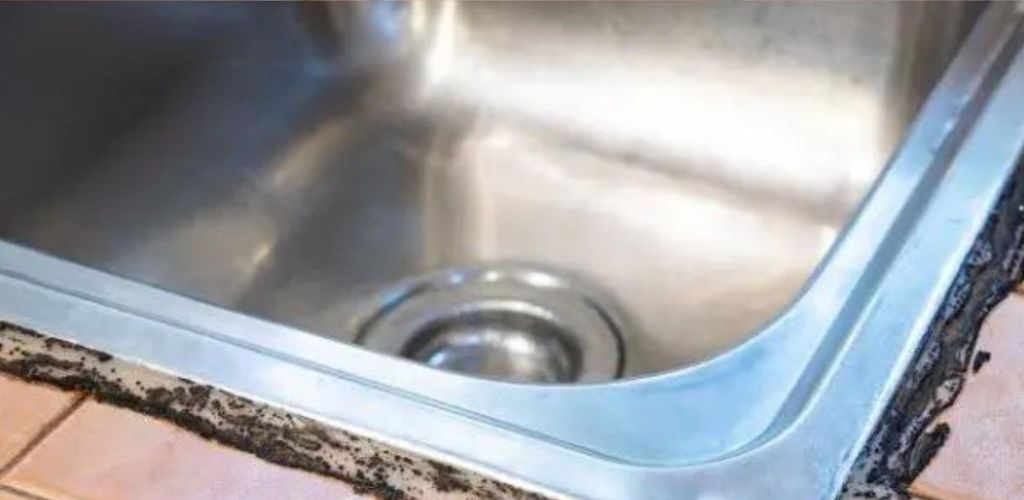
Constantly plagued by heat, steam and humidity, the bathroom is the room in the house most conducive to seeing a wave of mold unfold in every nook and cranny. These famous microscopic fungi that multiply in areas where water condensation forms. From walls to tiles to toilets, mold is a real problem that must be eradicated quickly to prevent the accumulation of bacteria.
Therefore, regular cleaning of the bathroom is highly recommended. It is also necessary to stop in certain precise areas where molds concentrate more quickly. Specifically, the shower seals: they are those that prevent water leaks and allow the different elements of the room to be sealed, such as the sinks, the shower tray or the bathtub. Generally, the most commonly used gasket is acetic silicone, which is very suitable for tiles, glass or enamel. Inevitably, over time, seals end up blackening and molding. Often, when they seem really in poor condition, we systematically think about changing them. But sometimes you don’t have to go that far. By periodically cleaning the joints, with very effective natural methods,
Are you afraid of spending hours scrubbing shower seals? Don’t be scared, to banish those unpleasant mold stains that stick to the silicone, we are going to propose some especially quick and effective remedies.
Sodium bicarbonate
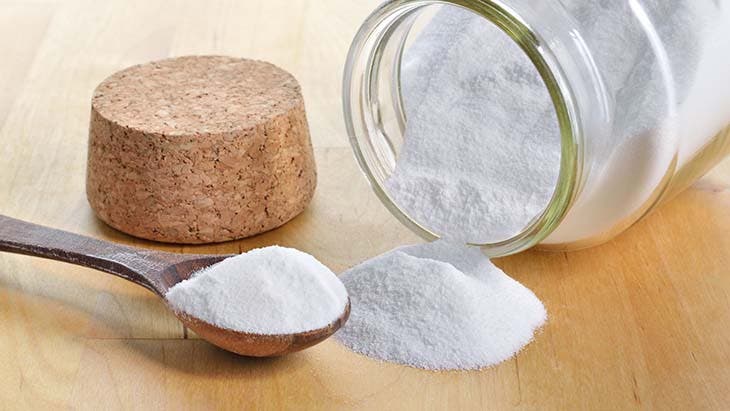
To remove mold from your shower seal, baking soda is especially recommended. Indeed, this powerful ingredient is the anti-mold cleaner par excellence, highly acclaimed by our grandmothers, and widely used in the world of household chores.
Simply prepare a mixture of one liter of water, 3 tablespoons of baking soda and 3 tablespoons of fine table salt. Mix all the ingredients and pour the solution into a spray bottle.
For a more effective action, you can also add 3 tablespoons of hydrogen peroxide, another very effective degreaser. Spray the mixture onto the moldy grout in the shower and let it sit for about 10 minutes. Use a toothbrush and scrub away any mold stains. Finally, rinse thoroughly with water.
You can repeat the process several times until all unwanted stains are removed.
White vinegar
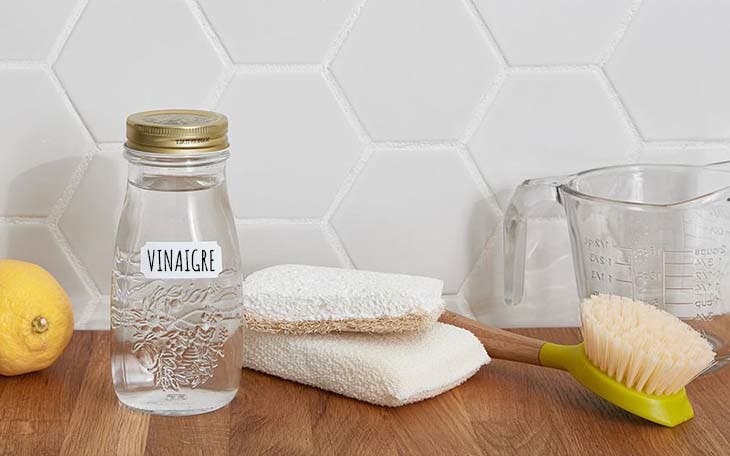
Like baking soda, you can also count on the disinfectant, stain-removing and deodorizing properties of white vinegar to drive away traces of mold and eliminate the bad odors it gives off. This natural and biodegradable ingredient is widely used in home cleaning to remove limescale and mold stains.
Prepare a solution of 2 cups of white vinegar in approximately 2 liters of water. The mixture obtained will also be effective for cleaning bathroom tiles and ceramics.
Pour the mixture into a spray bottle and spray the joint. Leave on for about 10 minutes, then rinse.
To guarantee an optimal result, you can also add two tablespoons of baking soda which will intervene even more effectively with its abrasive and whitening action.
Finally, use an abrasive or metal sponge and remove all the black mold.
NOTE: To prevent mold buildup, we recommend that you clean your joints at least once a week with a cloth soaked in white vinegar. At each end of application, remember to open your window to ventilate the room. Also make sure the shower seals always remain dry.
citric acid
Does the strong smell of white vinegar bother you? There is then an even more ecological alternative: the use of citric acid.
This ingredient is also very effective in case of mold stains, thanks to its anti-limescale and whitening properties.
Prepare a solution composed of one liter of water and 150 g of citric acid. Pour a little of the mixture on the stains and leave it to act for about 15 minutes. Then use a sponge and rub gently to remove all the dirt.
lemon juice
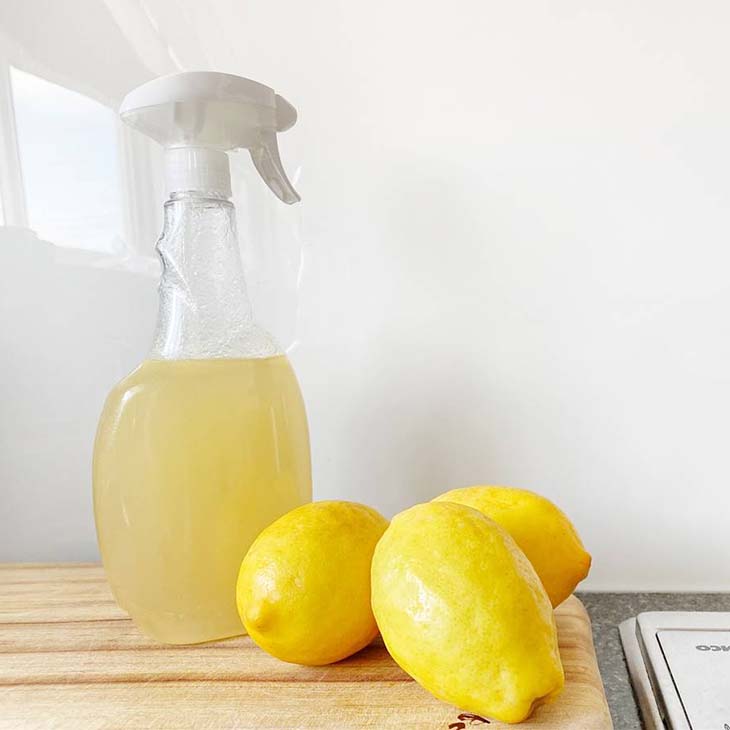
Another unexpected but equally effective remedy to make your silicone joints shine: lemon. This trick is great for removing deeper, more stubborn mold stains from shower grout. Lemon juice is a natural fungicide that hunts even the most invisible fungi to the naked eye. As an added benefit, it releases a delicate fresh and lemony aroma.
Start by pouring some baking soda directly onto the mold stains. Then moisten the stamp with hot water and let the baking soda sit for about half an hour. In a spray bottle, add water, half a tablespoon of baking soda, and the juice of one lemon. Spray a little of this mixture on the stains and then use the abrasive side of a sponge to completely remove the dirt and mildew.
Continue spraying the solution several times until the grout is completely whitened. Impressive result!
NB: You can also whiten moldy joints with toothpaste. Simply take a used brush, apply some white paste and scrub the mold affected area. After rinsing, the silicone will be shiny. However, this trick is only really effective if the seal is not very dirty.
Use
If despite your best efforts, these remedies are not as conclusive as you hoped, perhaps the mold is much more stubborn and more difficult to dislodge. It is better to call a specialist with more advanced equipment. Above all, do not let the problem prolong, because mold can be toxic and dangerous to your health.
Always wear gloves and a mask when cleaning as mold can be harmful to your health!