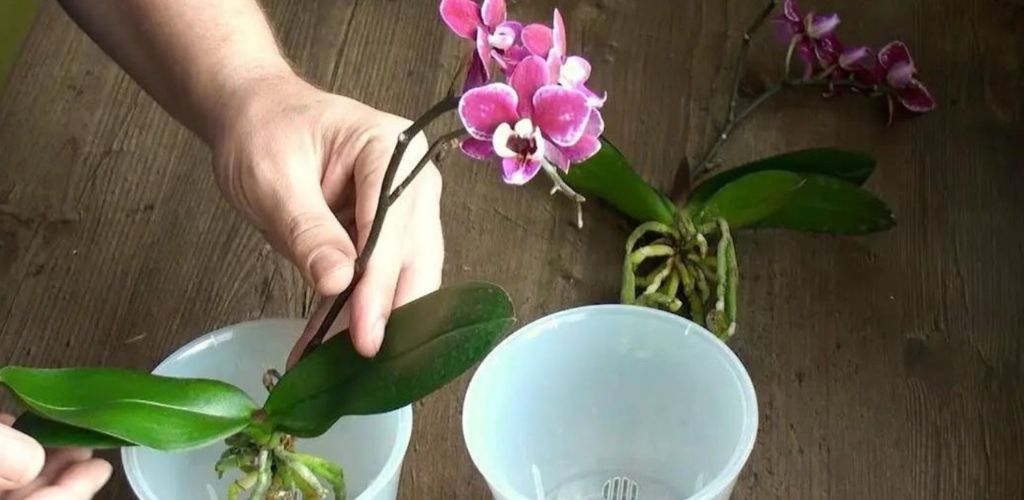
You just bought an orchid. Here it is enthroned in your living room, with its beautiful colorful flowers. You are very happy with it, but now doubt assails you. Aren’t orchids capricious plants, difficult to care for? Will you be able to keep it?
No panic. Orchids, and especially the best-selling Moth Orchid or Phalaeopsis, are actually very easy to maintain. Much more so than most other houseplants. And imagine: its beautiful flowering can last two, even three months!

The right thing to do to maintain an indoor orchid
Here are some tips to properly care for your orchid at home.
Turning on
Your orchid, like any other living plant, needs light; its only source of energy. Place it in a location where it will receive good light throughout the day, with a few hours of sunlight, especially in the morning.
irrigation
The best way to water an orchid is to submerge it in water. Most orchids are sold in transparent pots with drainage holes, which are placed in ornamental pots without holes. Every seven to 10 days, remove the plant and its pot from the pot and let them soak for 10 to 30 minutes in a bowl of warm water. Soak all the speck! Then, let the plant drain well and put the pot back in its pot: it’s that simple! After a few minutes, make sure that there is no residual water left in the cache-pot.
Sometimes we see the recommendation to water with ice cubes. A habit to avoid, since it only stresses the plant.
Ideal temperature
As for the temperature, don’t worry. The one at your house is perfect. High atmospheric humidity is beneficial, but avoid misting, which leaves spots on the leaves and can cause rot. Using a humidifier in the same room during the winter months will be enough to give it the necessary humidity.
Fertilization
Fertilize your orchid only from spring to late summer and very, very little. An all-purpose fertilizer will suffice.
A mature orchid will produce a new leaf from time to time… and lose an old one, which will turn yellow. Simply tear off the yellowed leaf. As for those weird aerial roots running all over the place, leave them alone. Its presence is normal.
Transplant
After two or three years, your orchid’s potting soil will begin to degenerate, becoming soft and rotten. The plant must then be transplanted, ideally at the end of winter. You need a special fertilizer for orchids, which does not contain real soil but rather pieces of bark and sphagnum. Shake off old potting soil, then prune off any dead, rotten, or damaged roots (they will be brown or soft). Add some moist substrate to the bottom of the pot. Center the plant in the pot, distributing the roots well. All or part of the aerial roots can be buried. Now add potting soil through the roots, tamping so the plant is firmly planted. It’s not more complicated than that.
How to make an orchid bloom again
When the last flower falls, you have two options (or choice). You can try forcing a mini bloom on the flower stem itself by cutting it just above the 2nd or 3rd node from its base, or cutting the entire stem at its base, which will ensure a later but more abundant flowering.
Typically, your orchid will bloom once a year, around the same time as the first time. So if you bought it in bloom in April, expect a spring bloom. In August? At the end of summer, etc.
Flowering occurs when the plant is ready: no special treatment is necessary.
And there you have it! Orchid culture in a nutshell. It’s not so rocket science, is it?