Humidity in the home is a very common problem, which can cause damage to the walls and ceiling. If the house is not well ventilated, mold and mildew can form over time. Exposure to them causes problems such as nasal congestion and irritation of the eyes or skin.
A natural and effective way to control humidity in your home, and therefore mold, is to put the right plants in place that help absorb it and improve air quality.
Below are some options for plants that can absorb moisture in the air through their leaves and then transport it to their roots.
Common ivy
It is a climbing plant that can be grown in hanging pots to prevent it from sticking to the walls. Native to the European Atlantic coasts, its natural habitat is humid and temperate forests. They are ideal for the most humid rooms in the house, such as the bathroom. It is also perfect above the kitchen sink or near the windows.
Spathiphyllum
This tropical plant does not tolerate frost and drafts, and for this reason it can only be placed indoors. It is watered once a week and does not need much light. Place it in the bedroom or other rooms that receive few hours of light.
Phalangium
This plant can absorb moisture in the air, but also eliminate toxins such as formaldehyde and xylene. It needs a few hours of light, but you should avoid putting it in the sun. Water once a week. The phalangium is a plant suitable for bathing.
Tillandsia
Also known as the “daughter of the air”, this plant feeds on the humidity of the air. It grows in rainy areas and, for this reason, its leaves are covered with trichomes, which are cells capable of quickly absorbing the water that is deposited on them.
Fern
It can be grown in hanging pots and thrives in humid and semi-shaded locations. However, if placed inside the house, it grows better if it receives a little light. It reduces the humidity in the air and purifies it.
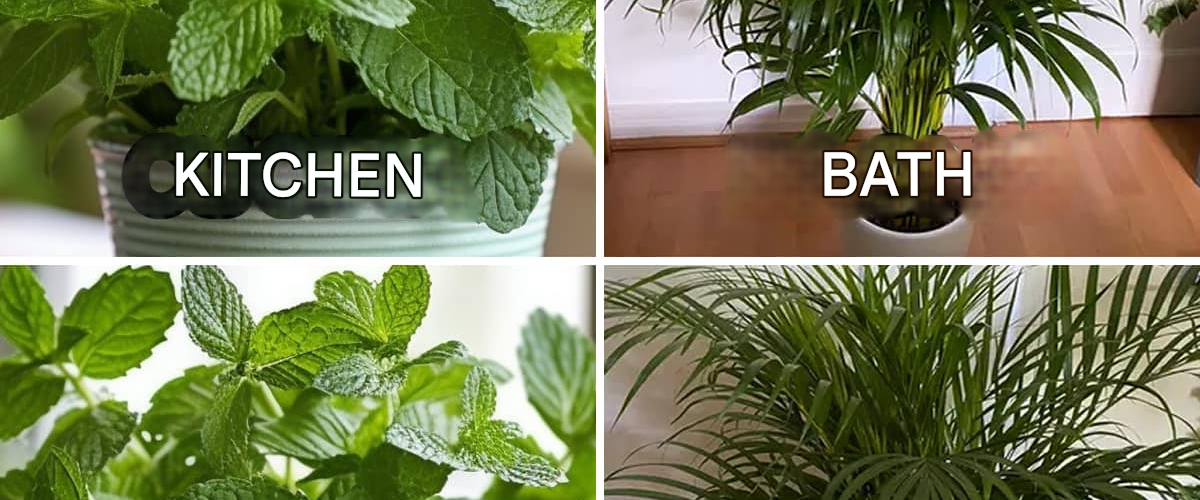
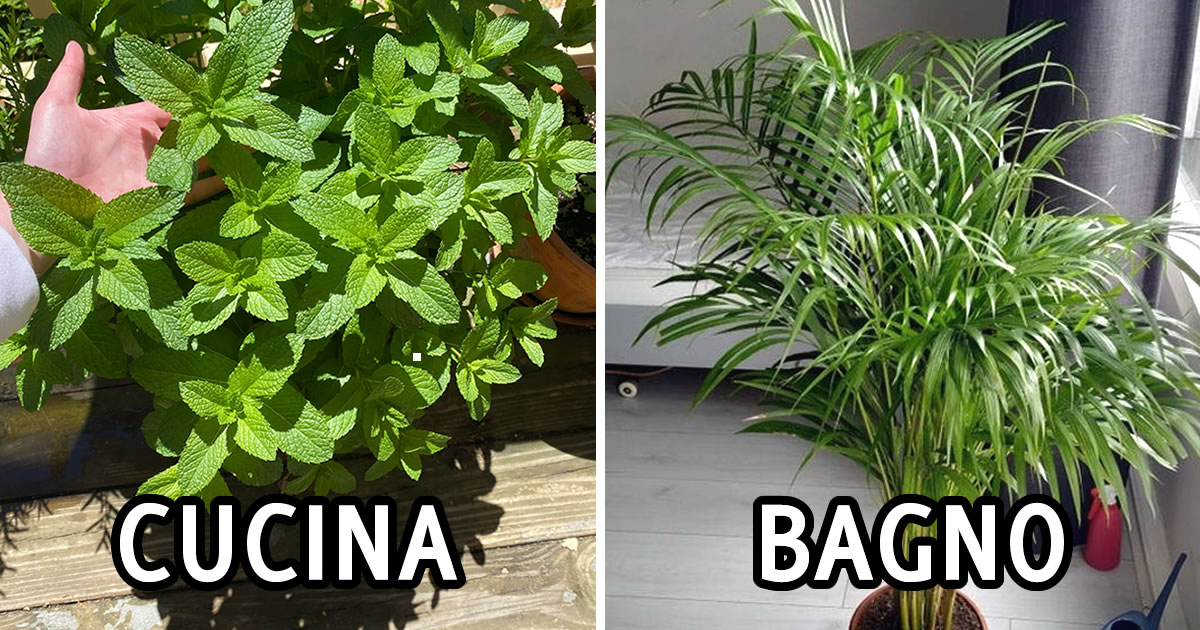
Mint
This famous aromatic plant is able to absorb moisture. It grows in moist places and soil and is ideal for putting in the kitchen or bathroom. Mint tolerates various different conditions and can also be grown in full sun.
Calatee
Native to Brazil and Peru, they are well-known ornamental plants that also have the ability to absorb moisture in the air. In the wild, they grow in very humid places, which is why they should be placed in the bathroom, near the shower or bathtub.
Orchids
They have beautiful flowers that also help reduce the humidity in the air. They absorb nutrients through the air and some have pseudobulbs, which can conserve water and better withstand periods of drought. They are great for bathing.
Palm trees
They are particularly suitable for the bathroom, as they are able to absorb moisture through their leaves. Among the best-known varieties of palm trees we find areca or bamboo, but there is plenty of choice in terms of shapes and sizes.
Trunk of happiness
Native to West Africa, Tanzania, and Zambia, this plant has white flowers that release a wonderful aroma. One of the most beneficial properties of this plant is its ability to purify the air in your home and absorb moisture.
Share article
Important: This website does not give medical advice, nor does it suggest the use of techniques as a form of treatment for physical problems, for which medical advice is required. If you decide to apply the information contained in this site, you do not assume responsibility for it. The intention of the site is to be illustrative, not exhortative or didactic.