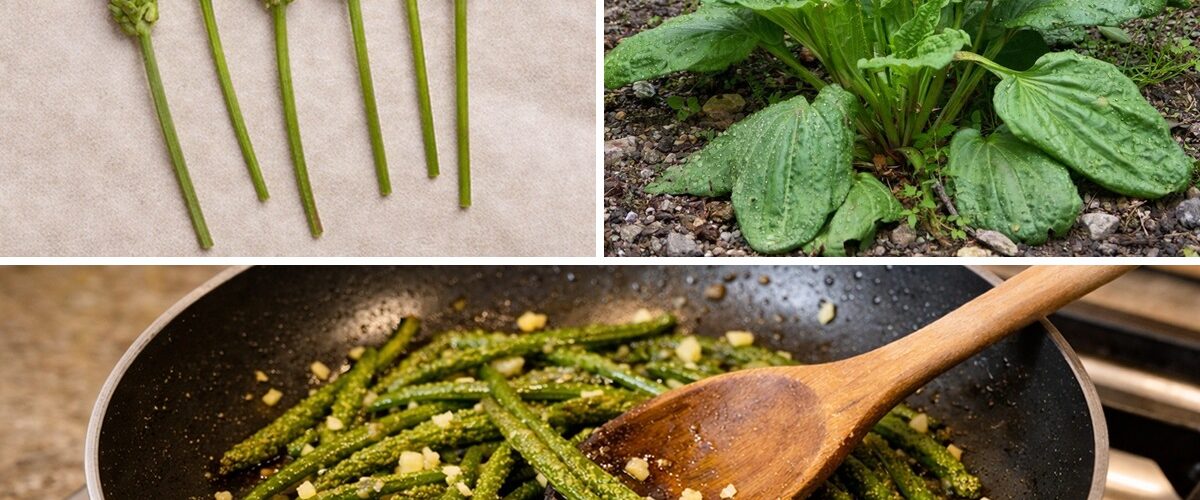
Our ancestors often used it, both in the kitchen and as a natural remedy: lanceolate plantain is one of the most abundant spontaneous medicinal herbs in our country and can be used for the preparation of infusions, tinctures and healing syrups.
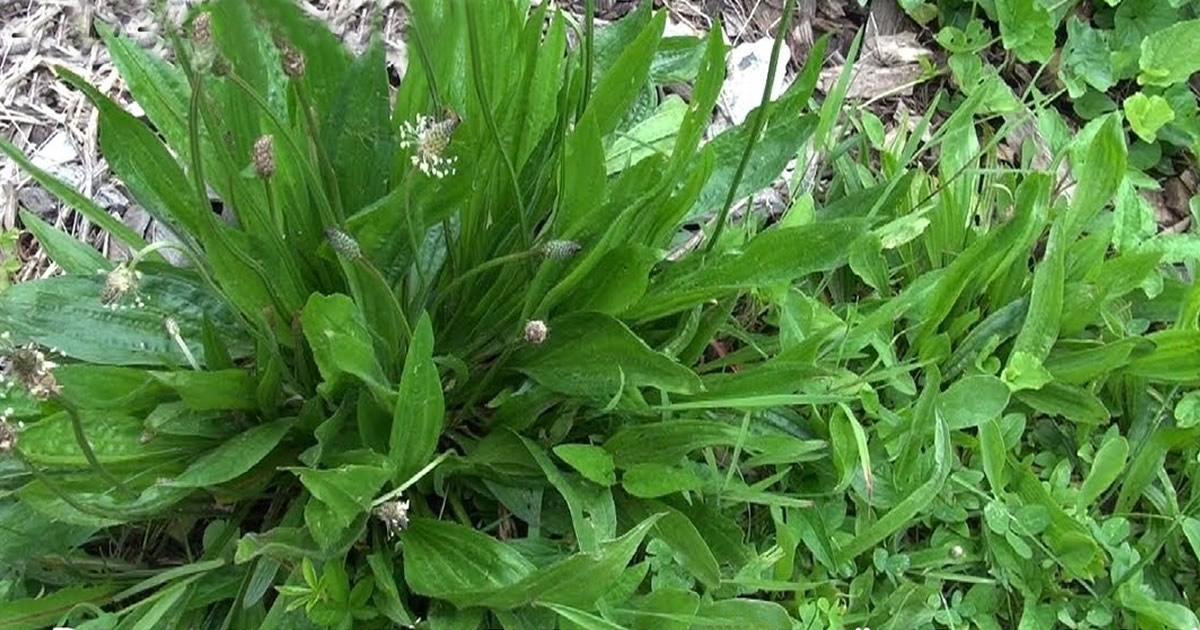
The lanceolate plantain is a spontaneous herb that grows almost everywhere in our countryside, and belongs to the same family as the greater plantain, the latter different because of the wider leaves.
In the peasant tradition, plantain was used as a “first aid” remedy, so much so that an old peasant adage said that “the way to plantain is shorter than that of the doctor“.
Obviously, this plant cannot replace the doctor, but it still offers healing properties that should not be ignored, and which we list below.
Lanceolate plantain contains flavonoids, iridoids, mucilage, tannins and minerals, all of which are packed with health benefits.
It is a plant that stands out for its relaxing and expectorant action, toning of mucous membranes, antispasmodic, anti-catarrhal, healing and hemostatic.
Lanceolate plantain can be used in the following ways:
- Tincture: Take 3-5 ml (60 drops – 1 teaspoon) 3 times a day to fight phlegm or digestive problems, such as gastritis or irritable bowel syndrome.
- Juice: Use the dried leaves to make a juice and take 2 teaspoons 3 times a day. This is used against cystitis, diarrhea and lung infections. You can apply the juice to wounds as well.
- Infusion: Drink a cup 3 times a day to fight phlegm. Use the tea to gargle and relieve a sore throat.
- Syrup: Add 225 grams of sugar to 300 ml of infusion and take 5 ml (1 teaspoon) to relieve sore throat and coughing.
- Poultices: Grind green leaves to prepare a poultice for wounds that have slow healing or chronic ulcers. Also useful in case of insect bites.
Now that you know all the wonderful properties of lanceolate plantain, the next time you see one, pick it up and try using it – it’s a wonder of nature.
Share article
Important: This website does not give medical advice, nor does it suggest the use of techniques as a form of treatment for physical problems, for which medical advice is required. If you decide to apply the information contained in this site, you do not assume responsibility for it. The intention of the site is to be illustrative, not exhortative or didactic.