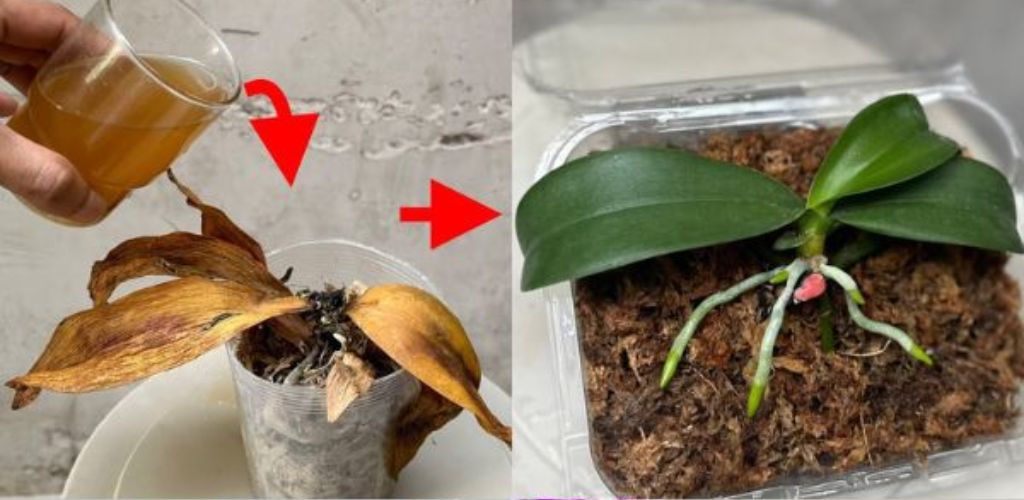
After losing its flowers, your orchid is no longer in good condition and are you afraid of losing it? To see if your exotic plant is still alive, the first thing to do is check the condition of the roots: they are firm and pale, they are alive and healthy. On the other hand, if they are brown and soft, they are dead. This means that your orchid is no longer able to absorb water and nutrients to survive. But is it possible to save him? Are there any tricks to revive a dying orchid? This article answers.
Why do orchids die?

The most common causes of orchid death are: excessive watering, slow soil drainage and lack of oxygen around the roots. A common mistake is to bring too much water to the plants which causes the leaves to yellow. Take into account that it is important that the top layer of the substrate is dry between waterings!

Being epiphytes, orchids need more oxygen around the roots, as well as bright, indirect light, a temperature range between 12°C and 23°C, relatively humid conditions sheltered from drafts and a substrate that retains sufficient humidity. To revive a dying orchid, it is essential to recreate the optimal conditions necessary for their growth as well as to cut off the dead roots.
How to revive an orchid without leaves?

A leafless orchid can survive if it receives proper care. The first and perhaps most crucial step is to check the condition of the plant. This will also allow you to detect other possible problems, if there are any. Check the stem and roots. If they are all in good condition, you have every chance of saving your plant. Keep in mind that damaged roots will prevent the orchid from forming new leaves.
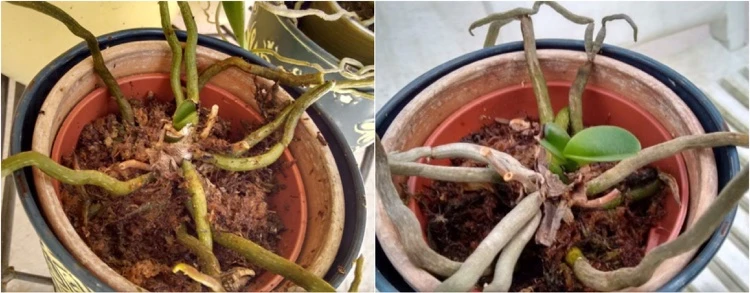
The second step is repotting. This can be very useful for plants that do not have leaves because it therefore helps them develop new leaves. Some gardeners even recommend repotting them in a clear plastic pot so that the roots have better access to sunlight. Remember that you are relying on the roots to provide the necessary energy and stimulate the plant to grow new leaves. Also consider moving your orchids to a greenhouse with a humidification system to recreate their ideal growing environment.
The last key point is nitrogen. This is vital for foliage growth. Therefore, using a fertilizer with a nitrogen concentration that matches that of potassium should help stimulate the appearance of new leaves.
How to save orchids with sunburnt yellow leaves?
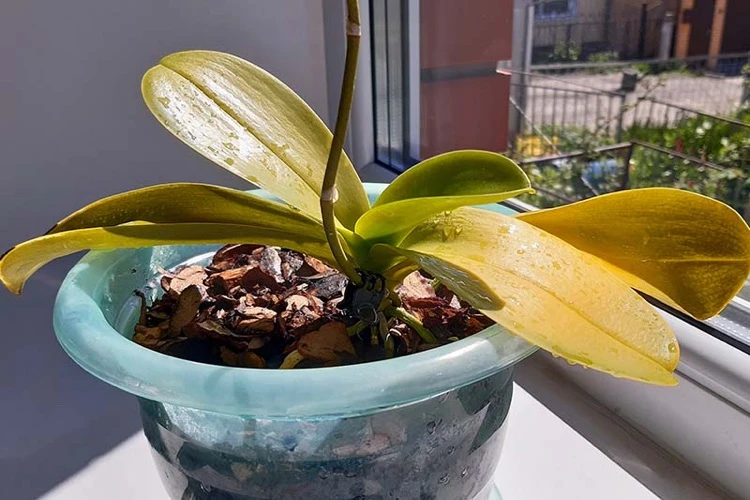
First, move your orchid to a bright location, but without direct light to reduce stress on the plant and avoid further damage. Orchids are used to dim light, so it’s important to try to mimic these conditions when choosing a new location for your plants.
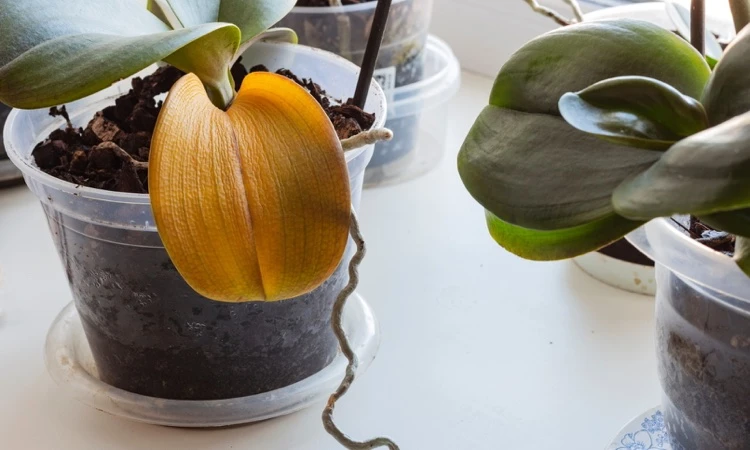
- Allow severely damaged leaves to dry and fall off on their own. Sunburned leaves will eventually dry out and die, but removing them too soon can harm the plant.
- Ideally, repot your orchid in a clear plastic pot. This is a critical step in reviving your plant and growing new leaves.
- Be patient: orchids with burnt foliage can take a long time to grow new leaves. Don’t despair!
How to revive an orchid that dies due to drought?

Symptoms: roots appear shriveled, white and dying. The leaves fall downward, lose their shape and appear soft rather than firm. It is also possible for foliage to yellow and flowers to drop due to drought stress. The stem may also turn brown and die.
Causes: too little or too little watering, excessive heat, low humidity, and too much sun.
How to proceed?

Place the potted orchid in a basin of water for 10 minutes, making sure the roots are completely submerged. This will allow the necessary moisture to reach the roots and ensure that the soil is evenly moist. Remove the pot from the tub and allow excess water to flow freely through the drainage holes.
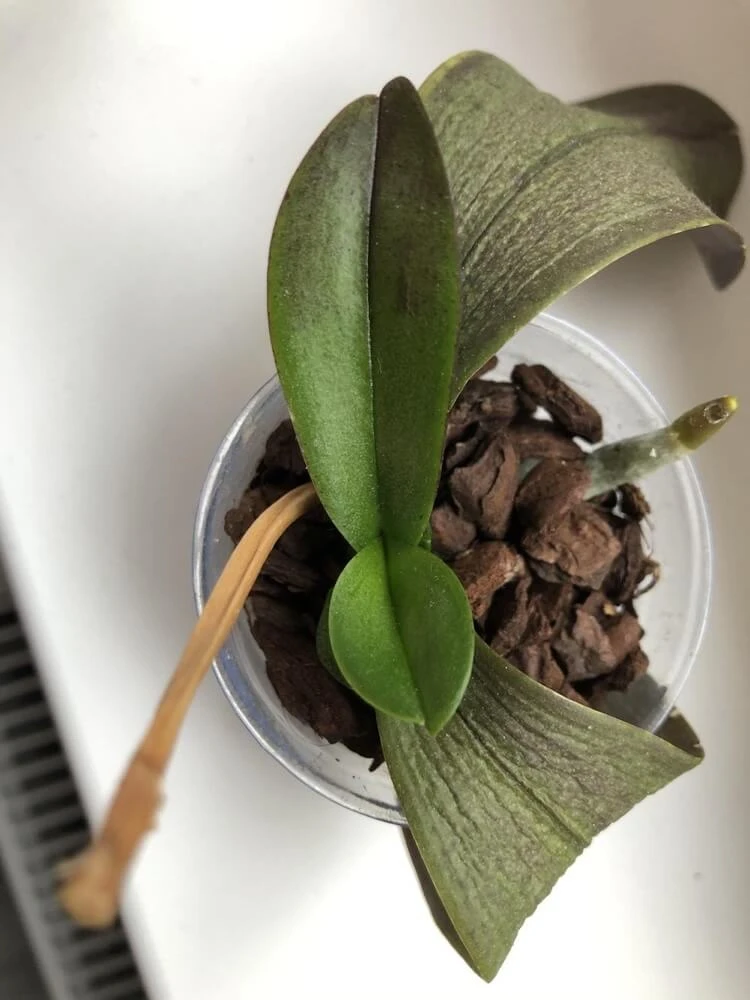
- Be sure to soak the orchid soil well. If you don’t need to place the container in a basin every time you water, it’s important to make sure you water the plant generously. This ensures that the soil is evenly moist and that the roots are able to absorb the water they need to replenish stored reserves.
- As a rule, orchids should be watered once every 7 days in spring and summer, and once every 14 days in autumn and winter, although this varies depending on the climate and housing conditions. The top layer of soil must be dry between waterings.

- When you are not watering, spray the leaves and roots every 2 days to create a humid microclimate and help the orchid that is dying from drought to revive.