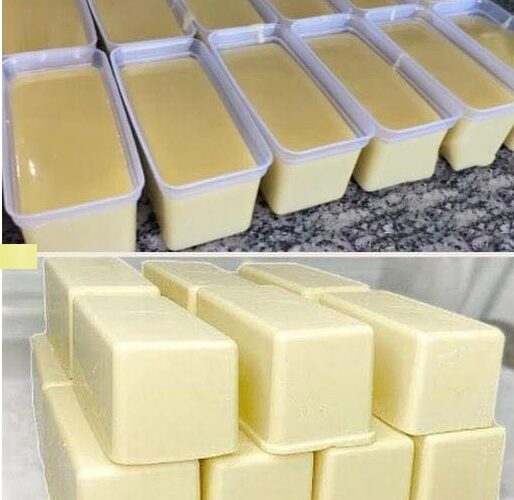
Transform used cooking oil into a professional-grade homemade soap! Not only is this process eco-friendly, as you reuse waste that is difficult to dispose of, but it is also economical and effective.
With this recipe you will get a multipurpose soap ideal for general cleaning at home. You won’t believe how effective this powerful soap is!
How to prepare homemade bar soap
With this recipe, you will take care of the environment and your pocket. You will get an economical, efficient and multi-purpose homemade soap!
Ingredients and Benefits:
- 2 liters of cooking oil (used or clean): It acts as the oily base of the soap, providing cleansing properties and a creamy texture.
- 100 ml of chlorinated water (lavandin): Helps eliminate bacteria and enhances disinfectant power.
- 100 ml of alcohol vinegar: Neutralizes odors and provides antiseptic properties.
- 2 tablespoons of baking soda: Improves cleaning, removes grease and disinfects.
- 2 tablespoons salt: It hardens the soap, giving it a solid texture.
- 4 tablespoons of soap powder: Increases cleaning power and generates foam.
- 500 ml of water: It makes it easier to mix the ingredients.
- 320 g caustic soda (96-99%): Key chemical reagent for saponification, transforming oil into soap.
- Kitchen thermometer
Procedure:
- Prepare the work area:
Wear gloves, a mask and protective glasses. Perform the procedure in a ventilated area to avoid inhaling the fumes from the caustic soda. - Dissolve the caustic soda:
- In a heatproof bowl, slowly add the 320g of caustic soda to the 500ml of water, never the other way around.
- Stir carefully with a wooden or plastic spoon. The mixture will generate heat, so be cautious.
- Filter and heat the oil:
- If the oil is used, strain it to remove residue.
- Heat it slightly (no more than 40°C) in a pot.
- Mix the liquids:
- Slowly add the caustic soda mixture to the oil, stirring constantly in gentle, circular motions.
- Add the additional ingredients:
- Add the chlorinated water, alcohol vinegar, baking soda, salt, and soap powder.
- Stir until the mixture reaches a uniform texture and thickens.
- Molding the soap:
- Pour the mixture into heatproof molds and let it sit for 24-48 hours to harden.
- Soap cure:
- Remove the soap from the molds and let it dry in a cool, ventilated place for 4-6 weeks before using it. This time allows saponification to complete and ensures that the soap is safe for the skin.
Councils:
- Safety First: Caustic soda is dangerous if not handled correctly. Always wear protective gear and perform the procedure away from children or pets.
- Do not mix metals: Use plastic, wood, or glass containers and utensils; The metal can react with caustic soda.
- Customize your soap: Add essential oils, such as lavender or eucalyptus, to give the soap a fragrance.
- Storage: Store the soap in a cool, dry place, away from direct sunlight.