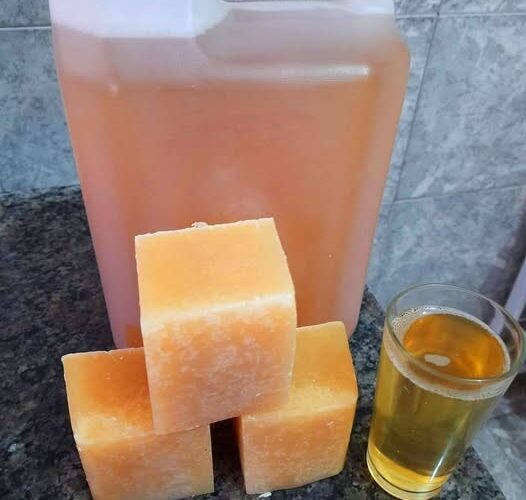
Making homemade liquid soap is an economical, sustainable and customizable option that allows you to cover various cleaning needs in your home. With simple, natural ingredients, you can create an effective product for different uses, from cleaning surfaces to washing clothes. Here’s an improved guide to how to prepare it, with tips and variations to suit your needs.
Basic ingredients
- 1 bar of grated soap: Ideally coconut or neutral.
- 2 tablespoons sugar: Smooth out the mixture.
- 2 tablespoons of baking soda: Neutralizes odors and helps degrease.
- 100 ml white vinegar: Acts as a natural disinfectant.
- 4 liters of water: Base of the mixture.
Step-by-step preparation
1. Grate the soap
- Use a fine grater to crumble the bar of soap. This makes it easier to dissolve in hot water.
2. Melt the soap
- Heat 1 liter of water in a large pot until it is about to boil.
- Add the grated soap a little at a time while stirring constantly until it is completely dissolved.
3. Add the additional ingredients
- Stir in the 2 tablespoons of sugar, baking soda, and white vinegar. Add the vinegar slowly to avoid excessive foaming.
4. Complete the mixture with cold water
- Add the remaining 3 liters of water and mix well to integrate all the ingredients.
5. Let it sit and store
- Let the mixture sit for several hours until it thickens. Once ready, transfer it to reusable bottles or airtight containers.
Tips for a perfect liquid soap
- Complete dissolution: Make sure the grated soap melts completely in the hot water to avoid lumps.
- Slow incorporation of vinegar: Add it a little at a time to prevent the mixture from bubbling excessively.
- Proper storage: Use airtight containers to preserve the consistency of the soap and extend its shelf life.
- Customization: Add essential oils such as lavender or lemon for a pleasant scent.
Benefits of homemade liquid soap
- Economic: The ingredients are accessible and much cheaper than commercial products.
- Sustainable: It helps reduce the use of plastics by reusing bottles and avoids the use of harsh chemicals.
- Versatile: You can adapt it for different purposes, from general cleaning to personal care.
Variations and combinations
1. Delicate Laundry Soap
- Replace neutral soap with a hypoallergenic one and omit vinegar to protect sensitive fibers.
2. Scented soap
- Add 10-15 drops of essential oils such as eucalyptus, lavender or lemon for aromatic touch and antibacterial properties.
3. More concentrated version
- Use just 3 liters of water for a thicker soap, ideal for tough stains.
4. Exfoliating soap
- Add 2 tablespoons of ground oats to the mixture for a gentle exfoliating effect.
5. Antibacterial soap
- Stir in 1 teaspoon of 70% alcohol to reinforce the soap’s disinfectant properties.
Common mistakes when preparing homemade liquid soap
- Lumps in the mixture: Make sure the water is hot enough to dissolve the grated soap.
- Excessive foaming: Avoid adding vinegar all at once; Slowly incorporate it.
- Lack of homogeneity: Stir constantly to integrate all the ingredients well.
- Improper storage: Use clean, airtight containers to prevent the mixture from changing texture or becoming contaminated.
Additional Uses of Homemade Liquid Soap
- General cleaning: Ideal for cleaning floors, bathrooms and kitchens.
- Laundry detergent: Combine with borax and sodium carbonate for a more potent homemade detergent.
- Personal Care: Use as a base to make shampoo or body wash, adding ingredients such as aloe vera or coconut oil.
- Glass Solution: Dilute the mixture a little more and use it to clean windows and mirrors without leaving residue.
Homemade liquid soap is a healthy, economical and sustainable alternative to commercial products. Its preparation is simple and allows great customization, adapting to various household needs. By following these steps and tips, you can make a high-quality product that takes care of your home and the environment. Dare to try it and enjoy its benefits!