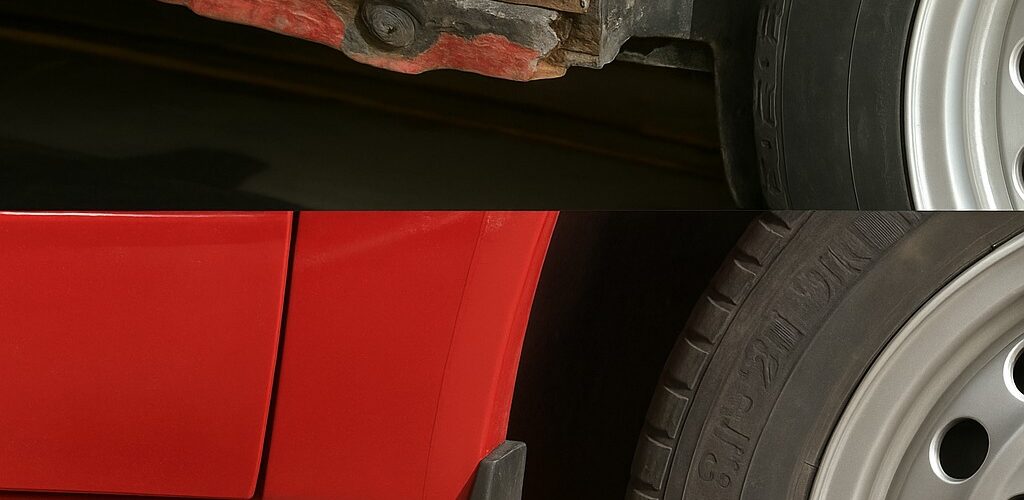
Rust is one of the worst enemies of any vehicle. Although welding is the most durable solution for major damage, it is not always within everyone’s reach. Repairing rust without welding is a viable option for minor, non-structural damage. This guide details how to perform this type of repair from home with basic tools and accessible products.
Materials and tools needed
- Protective goggles, gloves and mask
- Angle grinder with metal brush or sanding discs (80, 120 grits)
- Manual wire brush and spatula
- Soapy water, degreaser, or silicone remover
- Oxide converter or sealant
- Body putty and optionally fiberglass or reinforced putty
- Multi-grit sandpaper (180, 240, 320, 400, 600)
- Anti-corrosion primer
- Car Color Spray Paint or Paint System
- Clear varnish (spray or system)
- Masking tape, paper, or protective film
- Putty knife, brush, polishing cloth (optional)
Steps to Repair Rust Without Solder
1. Prepare the work area and clean:
- Work in a well-ventilated place.
- Wash the affected area thoroughly with soap and water, then dry and degrease.
- I covered nearby areas with tape and paper to prevent stains or dust.
2. Remove loose rust:
- Use the grinder with a wire brush or sanding disc to remove rust and peeling paint.
- Get to the clean metal. In difficult areas, use a hand brush or spatula.
3. Apply Oxide Converter:
- Apply the converter or sealant as directed. Let it dry completely. This will prevent the rust from moving forward.
4. Repair holes:
- For small holes, apply body putty in thin layers, letting it dry between each one.
- For large holes, reinforce with fiberglass mesh or caulk. I followed the manufacturer’s instructions for molding and letting harden.
5. Sanding and shaping:
- Sand the repaired area starting with 180 grit and working your way up to 400 grit or finer, depending on the desired finish.
- Look for it to be flush with the original veneer.
6. Apply primer:
- Clean the surface again.
- Apply anti-corrosion primer in thin, even layers. Let dry between coats.
- Sand gently with 600 grit before painting.
7. Paint and apply varnish:
- Shake the paint spray well. Apply several thin coats covering the repaired area and some of the original paint to blend the color.
- Let dry and apply several coats of clear varnish.
8. Final polishing (optional):
- Once completely dry (it can take several days), I gently buffed with polishing paste and cloth to integrate the edges of the paint.
Key recommendations
- Safety first: Always wear personal protection.
- Don’t rush: Take the time needed for each stage.
- Color Match: In large or visible areas, consider seeing a professional for color matching.
- Durability: This technique is used for aesthetic and maintenance repairs. For structural rust, consult with an expert.
- Periodic inspection: Check the repaired area from time to time to see if it rusts again.
Conclusion
Repairing rust without welding is a useful, economical and accessible alternative to improve the appearance of the vehicle and slow the advance of corrosion. Although it does not replace a professional repair, it can extend the life of the body and save costs if done with care and dedication.