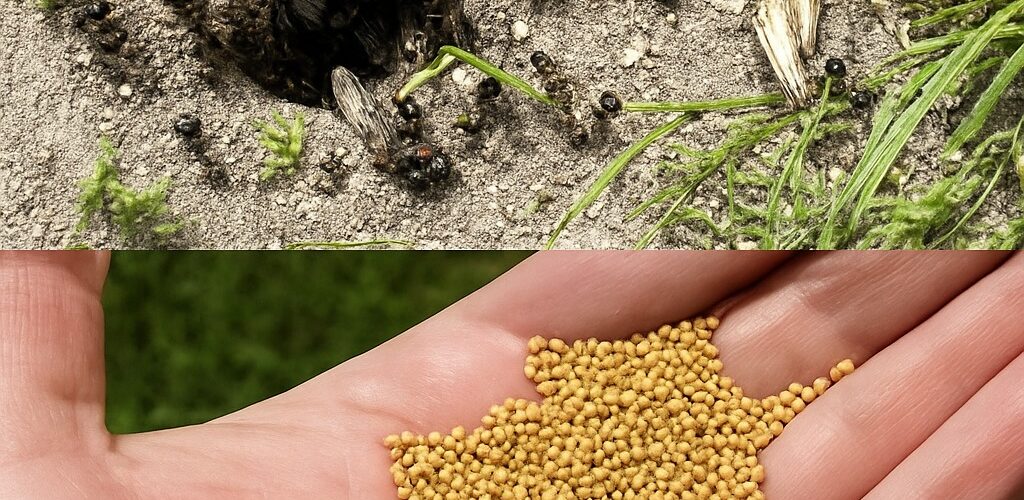
Ants, although small and seemingly harmless, can cause big problems in a vegetable garden. Its constant presence affects the growth of some plants, protects pests such as aphids and can hinder production. While eliminating them completely may seem difficult—especially if you can’t reach the queen—there are effective methods that are much safer than harsh chemicals.
Here are 7 effective and accessible ways to get rid of them without damaging your garden’s ecosystem.
1. Ammonia Alcohol (Liquid Ammonia):
Ammonia has a strong odor that disorients and scares away ants.
How to use it:
Prepare a mixture with one part ammonia to three parts water. Spray directly on ant paths and around anthills.
Tip: Its effect lasts for a few days, until the smell dissipates, so it may be necessary to repeat the application.
2. Essential oils (anise, peppermint, lavender):
Essential oils have a natural repellent effect.
How to use them:
Place a few drops directly on the anthill or dilute in water (about 10 drops per liter) and spray the affected areas.
Advantage: They do not harm plants or your pets, but they do require frequent reapplication.
3. Insecticides (with caution):
When the pest is very large, ant-specific insecticides may be necessary.
Recommendation:
Use only products authorized for gardens and orchards. Apply according to the instructions and avoid using them on rainy days or near food.
Caution: They can affect beneficial insects such as bees or ladybugs if not used correctly.
4. Boric acid with sugar or honey:
One of the most effective and economical traps.
How to make it:
Mix one teaspoon of boric acid with two teaspoons of sugar or honey. Place small amounts on lids or pieces of cardboard near the ants’ paths.
Why it works: Ants bring the mixture into the nest and poison the colony from within.
5. Millet (pisingallo or common millet):
Although its effectiveness is not universal, this natural method can help.
Use: Sprinkle grains of dried millet around the anthill. By absorbing moisture, they can decompose and damage food stored by ants.
Note: It works best as a supplemental measure.
6. Sticky traps:
An effective physical barrier to interrupt the passage of ants.
How to use them:
Place adhesive tape or sticky traps on the edges of pots, logs, or garden edges.
Warning: These traps may collect dust and need frequent replacement.
7. Spicy red pepper:
Capsaicino, present in chili pepper, is a powerful natural repellent.
How to use:
Sprinkle ground pepper around the anthills or make an infusion (hot water with pepper) and spray the affected areas.
Tip: After the rain, reapply to maintain its effectiveness.
Additional tips:
- Avoid leaving food or fruit scraps on the floor; This attracts ants.
- Regularly check your garden for new nests.
- Combine physical and natural methods for greater effectiveness and less environmental impact.
Removing ants from your garden doesn’t have to involve the use of toxic products or expensive solutions. With these homemade and natural methods, you can protect your crops without damaging the ecological balance. Remember that the key is in perseverance and in combining different techniques depending on the situation.