A heart attack (myocardial infarction) occurs when a coronary artery becomes blocked, preventing oxygen from flowing to the heart. The faster you act, the greater the likelihood of avoiding serious harm or death.
Some symptoms are described below:
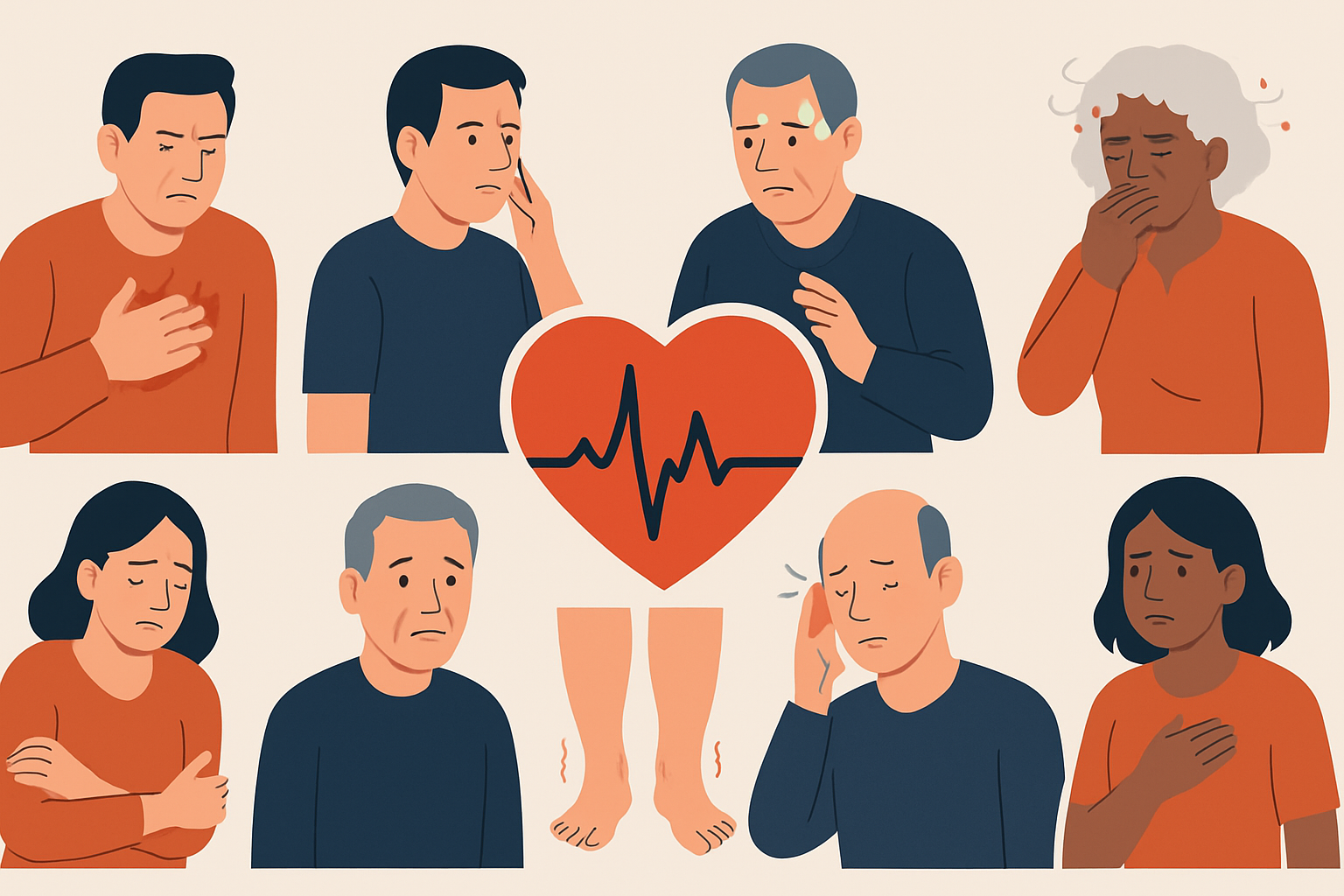
1. Severe chest pain or pressure
A feeling of tightness, weight, or “crushing force” just behind the breastbone, which may radiate into the jaw, neck, arms, or back.
– This discomfort usually persists for several minutes, or reappears at intervals.
2. Pain in the arm, jaw, neck, or back
The pain may spread to the left arm (sometimes both), shoulder, jaw, neck, or upper abdomen .
3. Shortness of breath
Feeling short of breath, either with chest pain or in isolation.
4. Cold and heavy sweating
Excessive perspiration without prior physical exertion; hands may be wet and cold .
5. Nausea, vomiting, or indigestion
It occurs most often in women, and it may seem like a typical upset stomach that doesn’t get better with digestive treatment.
6. Unexplained extreme fatigue
Severe tiredness that persists even after resting: it can be one of the first symptoms, even up to a week before, especially in women.
7. Palpitations or irregular heartbeat
Feeling of fast, irregular, or “skipping” heartbeat.
8. Dizziness, vertigo, or lightheadedness
Reduced blood flow to the brain can cause feelings of imbalance or loss of consciousness .
9. Intense anxiety or feeling of impending death
Some people report extreme stress or feelings of panic just before or during the crisis.
10. Abnormal discoloration of the skin, lips, or nails
If they look bluish or pale, it may indicate a lack of oxygen in the blood.
11. Swelling in the legs, ankles, or feet
It may indicate that the heart is not pumping effectively, causing fluid retention
What to do if you suspect a heart attack?
- Call emergency services (112, 911 or another local number) immediately.
- Stop any activity: sit or lie down in a comfortable position.
- Aspirin: If you have no contraindications, chew and swallow one 300 mg tablet (or two 81 mg tablets) while waiting for help.
- Nitroglycerin: If prescribed, use as directed.
- Wait for emergency services without moving, and provide relevant medical information.
Atypical types of heart attack: less pain, more signs:
- In women, the elderly or diabetics, the heart attack can occur without chest pain, but with:
- Extreme fatigue
- Nausea or upset stomach
- Feeling of suffocation
- Dizziness or lightheadedness
Recognizing the 11 early signs — such as chest pain, tiredness, cold sweats, nausea, or palpitations — can make the difference between life and death.
If you suspect a heart attack, act fast: call 911, take aspirin/doctor if appropriate and receive immediate care.
Prevention: Take care of your heart
- Maintain a healthy diet based on natural foods.
- Get moderate exercise at least 150 minutes per week.
- It controls blood pressure, cholesterol and diabetes.
- Don’t smoke.
- Reduce stress and sleep well.