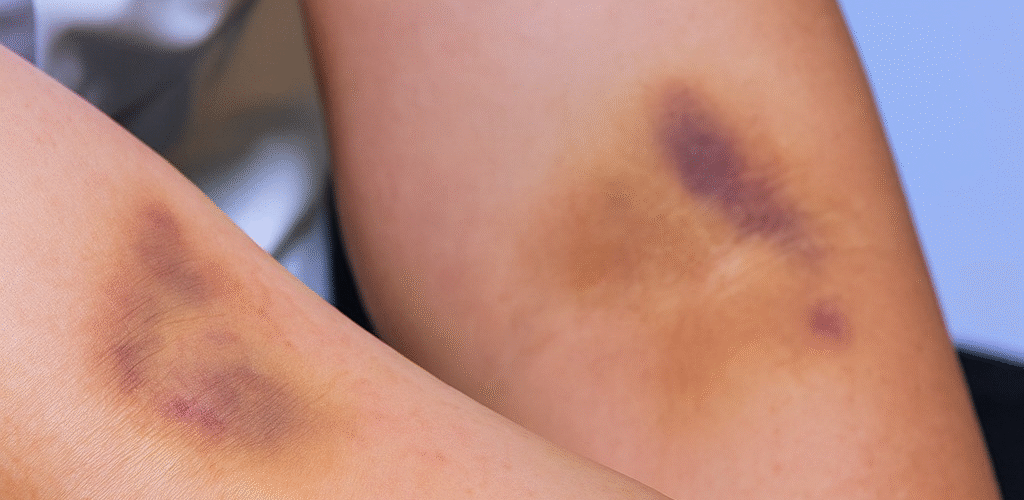
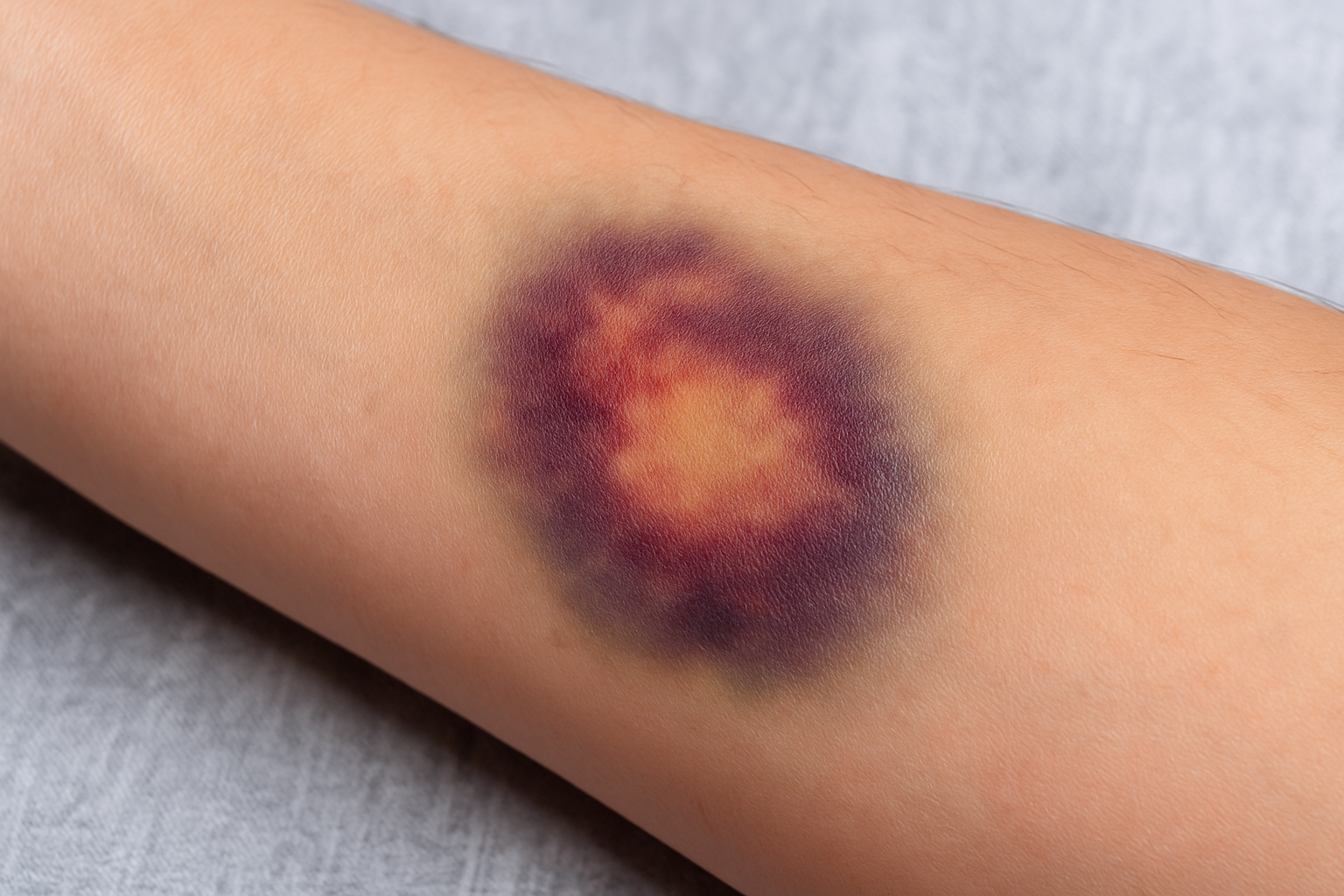
It happens to many people: a small bump that is barely noticeable ends up leaving a large bruise on the skin. Or worse, they discover a bruise without remembering any blows. Although in most cases it is not a serious problem, frequent bruising can be a signal that your body is sending you.
In this article, we’ll tell you what the most common causes are, when you should be concerned, and what you can do to prevent them.
🟣 What exactly is a bruise?
A bruise, also called a hematoma, is a collection of blood under the skin caused by the rupture of small blood vessels (capillaries). When these vessels rupture, blood seeps into the surrounding tissues, resulting in that characteristic violet, blue, or greenish color.
🔍 Common Causes of Easy Bruising
1. Capillary fragility or skin aging
As we age, the skin becomes thinner and loses collagen, which weakens blood vessels. This means that even a soft rub can cause a visible bruise.
2. Vitamin deficiency
A lack of essential nutrients such as vitamin C, K, or B12 can weaken blood vessels and make it difficult for the blood to clot properly. Iron deficiency may also be related to frequent bruising.
3. Use of certain medications
Some medications can increase the chance of bruising, including:
- Blood thinners (such as aspirin or warfarin)
- Anti-inflammatories (ibuprofen, naproxen)
- Corticosteroids
- Supplements such as ginkgo biloba or fish oil
4. Bleeding disorders
In less common cases, frequent bruising may be a symptom of blood diseases such as hemophilia, idiopathic thrombocytopenic purpura, or leukemia. These conditions affect the body’s ability to form clots and stop bleeding.
5. Hormonal changes
Some women notice that they become more prone to bruising during certain stages of the menstrual cycle or with the use of hormonal birth control. This may be related to variations in estrogen levels.
6. Intense physical activity
Strenuous exercise, such as lifting weights, can lead to small muscle tears or capillary breaks, resulting in bruising even without obvious bumps.
🚨 When should you see a doctor?
While most cases are not concerning, it is advisable to seek medical attention if:
- Bruising appears for no apparent reason or very often
- Are very large or painful
- They appear along with nosebleeds, gums or heavy periods
- You have extreme fatigue or uncaused weight loss
- They take more than 2 weeks to go away
✅ How to prevent bruising?
- Eat well: I included fruits and vegetables rich in vitamin C, such as oranges, kiwi, bell pepper and broccoli.
- Protect your skin: Wear clothing that covers your arms and legs if you’re physically active or in tight places.
- Take care of your medications: Don’t take blood thinners or supplements without a prescription.
- Avoid excess alcohol, as it can affect liver function and clotting.
- Consult a professional if you notice that this happens frequently without obvious cause.
In short, frequent bruising may simply be a feature of your skin or a sign that your body needs more attention. Listening to those signals and acting in time can make all the difference.