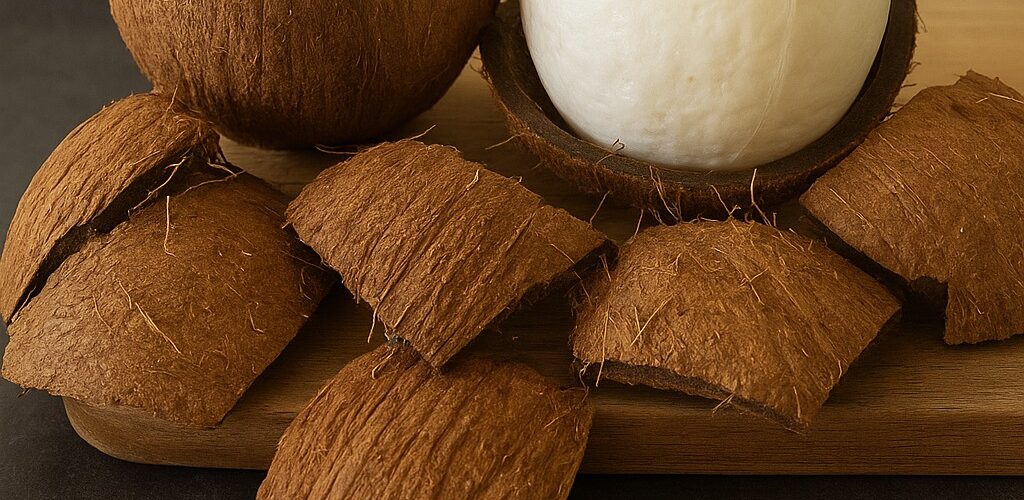
Peeling a dried coconut can seem like an intimidating task to many people. Its thick, fibrous shell can give the impression that a lot of force or special tools are required to open it. However, with some simple and safe techniques, it is possible to remove the peel and extract the pulp without complications.
Coconut is a highly nutritious fruit, rich in healthy fats, fiber, minerals such as magnesium and potassium, and is widely used both in cooking and in natural beauty treatments. Learning how to open it correctly not only makes it easier to consume, but also allows you to make the most of all its parts, from the pulp to the peel.
Below are 2 effective methods for peeling a dried coconut, along with additional tips that can be of great use.
Method 1: Freezing
This method takes advantage of the natural contraction of materials as they cool to separate the shell from the pulp automatically.
Steps:
- Preparing the coconut: Wash the coconut to remove impurities and traces of external fibers. This will prevent unwanted particles from entering when handling it.
- Water extraction: At one end of the coconut there are three visible holes, known as “eyes”. One of them is softer. Use a knife or screwdriver to pierce it and pour the water into a container. This water is edible and can be refrigerated for later drinking.
- Freezing: Place the coconut in a plastic bag and place it in the freezer for at least 24 hours. During this time, the pulp will contract.
- Thawing and opening: Once frozen, leave the coconut at room temperature for an hour. Then, using a hammer or similar utensil, gently tap the entire surface. The peel will crack easily, leaving the flesh intact and ready for consumption or preparation.
Method 2: Direct Heat
Ideal for those looking for a quick solution using conventional cooking.
Steps:
- Empty the water: As in the previous method, pierce the soft eye of the coconut and empty the liquid.
- Apply heat: Place the coconut directly over an open flame (such as a gas stove burner), turning it constantly with tongs so that it heats evenly.
- Opening signal: After a few minutes, you’ll start to hear a slight cracking or popping sound, a sign that the flesh has separated from the peel.
- Cool and open: Remove it from the heat, let it cool for a few minutes, and then carefully tap it open and extract the pulp. This will come out in large chunks and more easily.
Additional Tips
- Reuse of the shell: Once the pulp is removed, the coconut halves can be used as bird feeders, small pots, or even as artisanal containers.
- Cleaning the pulp: To remove any stuck-on peel, you can use a vegetable peeler or soak the pieces in hot water for a few minutes before peeling them.
- Storage: Store the pulp in an airtight container in the refrigerator for up to a week, or freeze it for use in smoothies, desserts, or sauces.
- Culinary use: Coconut pulp can be grated, dried, or processed into coconut milk or homemade oil.
Mastering these methods not only makes it easier to consume coconut, but also allows you to enjoy its properties and multiple uses in a practical and economical way!