Given the increase in the price of gas and the difficulty in accessing alternatives such as solar or wood-fired stoves with cement, this article teaches a quick, safe and completely free solution for cooking in emergency situations: a stove made with recycled cans, stones and homemade materials.
Materials Needed
- 1 large can (such as powdered milk)
- 1 empty can of insecticide
- 1 ordinary can (can be vegetable or soup)
- Gravel, stones or sand
- Plastic bag
- 4 large stones to hold the pot
- Firewood or dry branches
- Basic tools: knife, tweezers, marker, nail
Steps to Building the Stove
1. Prepare the cans
- Remove the lid from the large can.
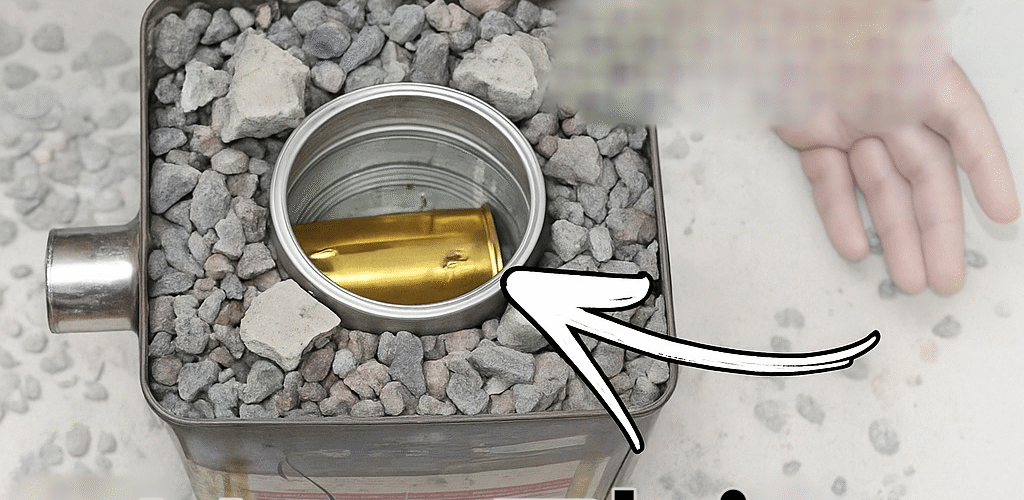
- Place the can of insecticide inside and mark the necessary cuts to fit it.
- Make “pizza” cuts on the edges to make it easier to fit.
- Remove the residual air from the insecticide can and pierce it so that it does not explode.
- Insert this can into the can of powdered milk.
2. Assemble the structure
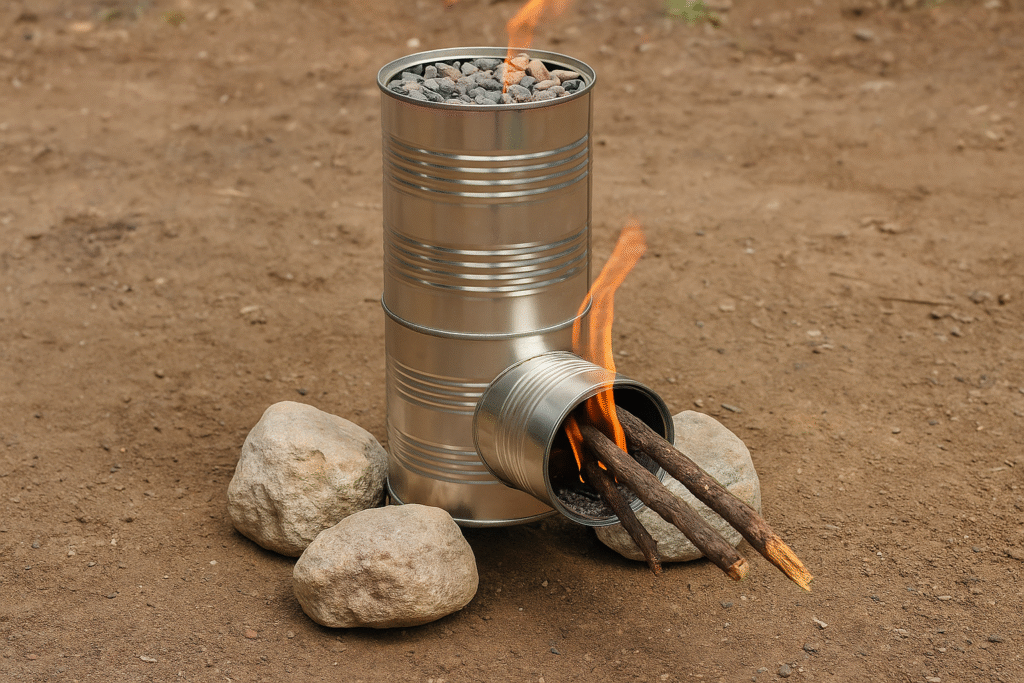
- Cut another opening the size of the regular can into the side of the large can.
- Fit that second can forming an “L” shape where you will feed the fire.
- Place a bag inside the main can and fill it with gravel or gravel.
3. Prepare the cooking base
- Remove the bag and put four rocks around the stove as a support for the pot.
- Make sure they are higher than the stove to allow air to circulate.
Ignition and Use
- Place thin wood through the side tube to start the fire.
- Once lit, add larger branches to keep the flame going.
- You can use dry wood or pruning remains.
- In the absence of gravel, use sand as thermal insulation. Wet slightly to prevent the wind from blowing it into the pot.
Practice
- Use only dry wood, never green or wet.
- Store branches in a protected place to have them available when you need to cook.
- Do not leave the stove unattended while it is on.
- Ideal for emergencies, camping or energy saving.
Advantages of this Stove
- Totally free and reusable.
- It does not require cement, mud or special tools.
- Easy to assemble in less than an hour.
- Ideal for rural areas, blackouts or crisis situations.
For a better understanding of this content we invite you to watch the following video from the Soy Víctor Internacional channel:
This homemade stove not only helps you save gas, but can be a vital tool in contexts of emergency or energy poverty. Taking advantage of recycled materials for cooking is a sustainable, accessible and effective way to solve an everyday problem.