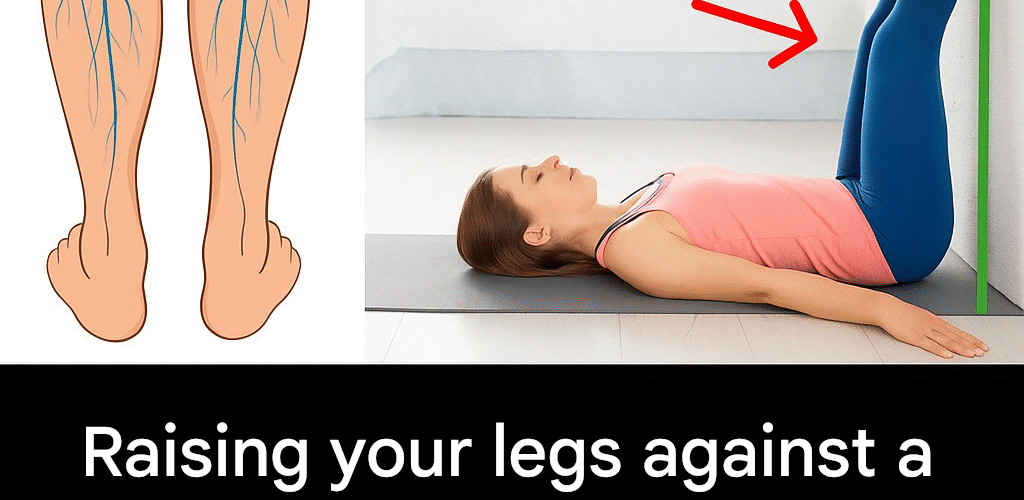
In the midst of the fast-paced pace of daily life, finding simple yet powerful practices to take care of our bodies can make a big difference. One of those gestures as simple as it is effective is to raise your legs against a wall for a few minutes a day.
This pose, known in yoga as Viparita Karani, requires no physical effort, is free of charge, and can be practiced at home, before bed, or even during a break from work. The surprising thing is that this simple position hides great benefits for physical and mental health. Below, we tell you what they are and why you should incorporate them into your daily routine.
5 Benefits of Lifting Your Legs Against the Wall
1. Improves blood circulation
When we raise our legs above the level of the heart, we facilitate venous return. This helps blood pooled in the lower extremities flow back to the heart, reducing swelling, heaviness, and preventing problems such as varicose veins. It is ideal for those who spend many hours standing or sitting.
2. Relieves fatigue and muscle tension
After a long day, this pose can help relax the muscles in your legs, feet, and lower back. Gravity does its part by decreasing pressure on these areas, which relieves pain and promotes a feeling of deep rest.
3. Promotes digestion and intestinal transit
Although it may seem curious, by reducing stress and improving circulation, the digestive system is also stimulated. Many people find that this pose relieves discomfort such as abdominal heaviness or mild constipation, especially if practiced after a light meal.
4. Reduces anxiety and improves mood
Staying in this position for a few minutes, with deep and conscious breathing, can help reduce levels of cortisol, the stress hormone. This generates a calming effect on the nervous system, ideal for reducing anxiety, improving sleep and lifting mood.
5. Improves sleep quality
Practicing this posture before going to sleep helps to relax body and mind, making it easier to rest. In addition, by reducing muscle tension and calming the mind, many people report that falling asleep becomes easier and deeper.
Tips for practicing this pose
- Find a quiet and comfortable place. A free wall, a mat or blanket on the floor will suffice.
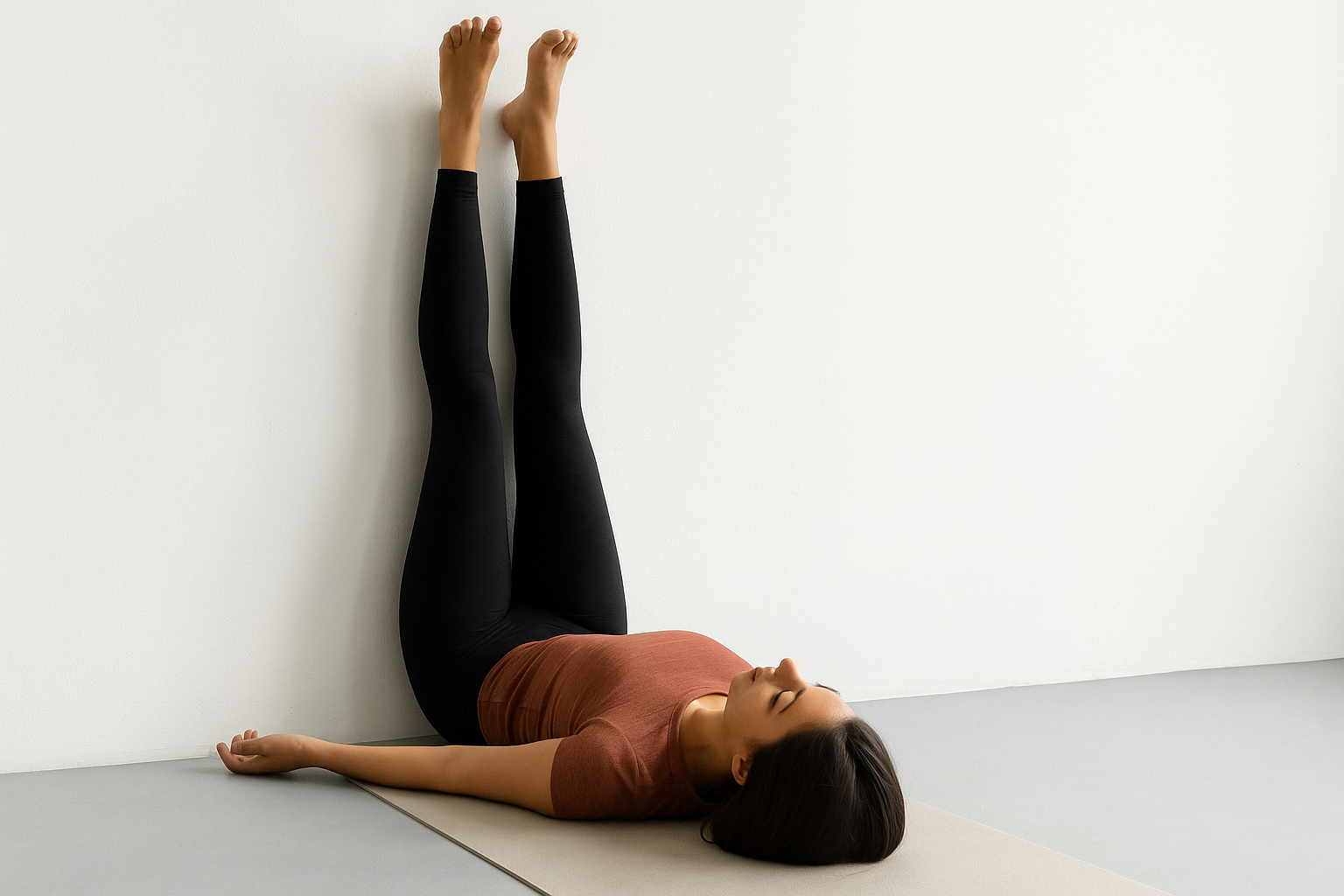
- Rest your hips close to the wall and bring your legs straight up, with your back on the floor.
- Keep your arms relaxed at your sides and take a deep breath for 5 to 15 minutes.
- If you feel tension in your lower back, place a pillow under your pelvis.
- Avoid this pose if you have glaucoma, uncontrolled high blood pressure, or severe spinal problems. It is always advisable to consult with a health professional.
Incorporating this habit into your day may seem small, but its effects can transform how you feel physically and emotionally. Sometimes, the simplest is the most powerful.