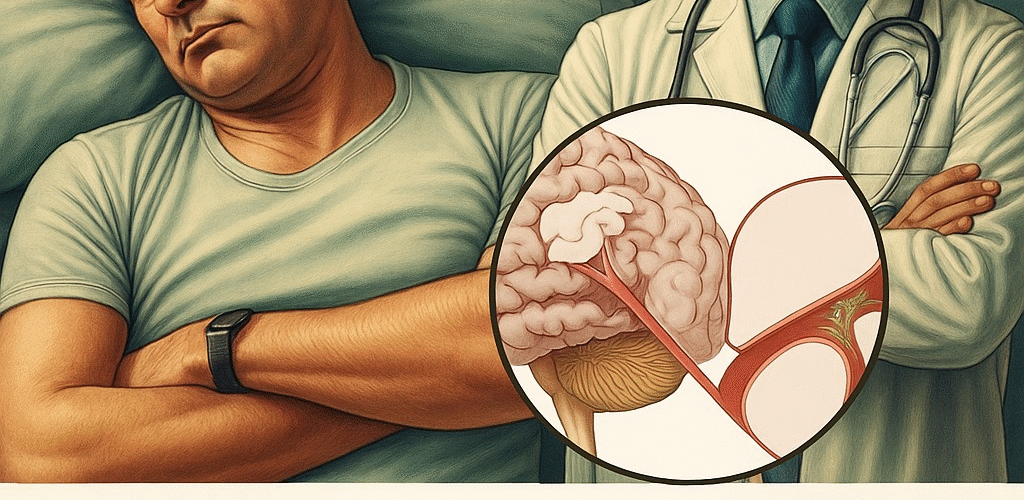

From the age of 40, the body begins to manifest changes that we often overlook. However, paying attention to certain symptoms can be key to preventing serious conditions such as Cerebrovascular Accident (CVA), also known as stroke.
This event, which occurs when blood flow to the brain is interrupted, can have devastating consequences, but with early detection, many cases can be prevented.
In this article, we explore the nighttime and daytime symptoms that should not be ignored, especially after the age of 40, and how to act on them.
Why does the risk of stroke increase after the age of 40?
Aging brings with it an increased likelihood of hypertension, high cholesterol, type 2 diabetes, and cardiovascular disorders. All of these factors increase the risk of stroke. In addition, the pace of life, accumulated stress and lack of physical activity contribute to this risk.
Nighttime symptoms to look out for
1. Sleep apnea:
Loud snoring, pauses in breathing, and sudden awakenings can indicate sleep apnea. This condition cuts off oxygen to the brain, which greatly increases the risk of stroke.
Advice: See a sleep specialist. Sleeping in a side position or using a CPAP mask can help in many cases.
2. Intense night sweats:
They can be related to hormonal imbalances, uncontrolled hypertension or cardiovascular problems.
Advice: Regularly measure your blood pressure and monitor your diet.
3. Headaches upon waking up:
A severe and frequent headache upon waking could indicate intracranial pressure problems or an undiagnosed sleep disorder.
Advice: Do not underestimate this symptom if it is recurrent and consult a doctor.
Daytime warning signs
4. Numbness or weakness on one side of the body:
It is one of the clearest signs of a possible imminent stroke. If you notice sudden weakness in your face, arm or leg, especially on one side, seek immediate medical help.
5. Difficulty speaking or understanding:
Sudden stuttering, confusion, or inability to understand simple sentences can be red flags.
6. Loss of balance or coordination:
Stumbling, dizziness, or difficulty maintaining balance with no apparent cause may indicate a neurological problem.
7. Blurred vision or loss of vision in one eye:
Sudden changes in vision can also be associated with a stroke, especially if they occur suddenly and painlessly.
Being aware of these symptoms, both nocturnal and daytime, can help us detect warning signs early and prevent a stroke. It is not a matter of living in fear, but of acting with awareness and responsibility.
Taking care of yourself after 40 is a smart and necessary decision to maintain long-term health!
Important: This article is informational and does not replace medical consultation. If you experience any of these symptoms, seek professional care as soon as possible.