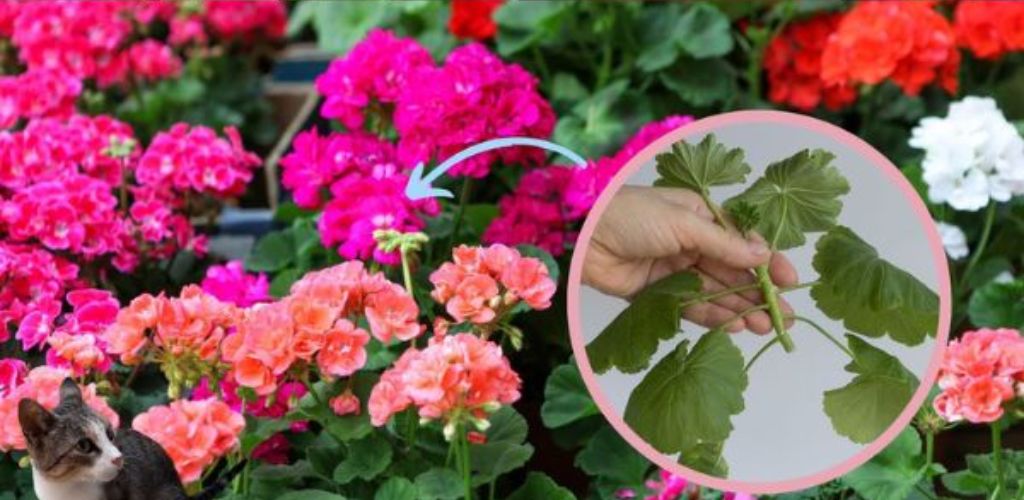
Geraniums are undoubtedly one of the most popular flowers to place on balconies, in the garden or in a planter on the windowsill.
 However, when the temperatures begin to drop and the hours of sunshine decrease, that is, between the end of summer and autumn, it is time to take care of your pruning. At this time you can also make cuttings so that plants can grow that will be ready. for the following spring.
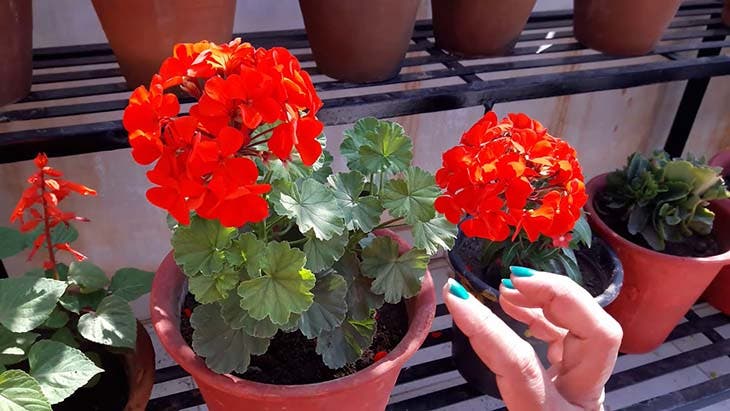
prune geraniums
Pelargoniums (real name for geraniums) tend, in most cases, to “grow poorly”. Proper pruning means shaping the bush so that it becomes denser and fuller. This is done by shortening the longest branches, and always just above a stem node. Therefore, you should consider leaving the crown as compact and round as possible, without cutting too much.
Before cutting branches, however, make sure that the scissors or shears are sharp and disinfected: to sterilize them, you can pass the blade over a lighter flame for a few seconds or rub it with a little isopropyl or ethyl alcohol. If you have to prune many different plants, it is best to carry a lighter or alcohol and clean the blades well before starting work on a new plant.
How to grow new cuttings?
You can propagate geraniums by pruning cuttings, that is, by planting them in new pots.
You will need small pots, usually 15cm in diameter, which you will fill with a first layer, a few fingers deep, of expanded clay, then continue adding good, rich, compact soil up to three quarters of the height of the pot.
Now take a glass of water and a packet of rooting hormone powder and open the lid. Take the first cut branch, dip the cut part in water just a few centimeters, then immediately dip it in the rooting powder, then place the branch on the ground. If you don’t have this rooting powder (available at garden stores, nurseries or even online), you don’t have to use it, but in that case some people prefer to keep the twigs in water, changing it every two days. – until they produce roots.

Continue in this way with the other branches until the pot is full. At this point, very carefully take a few more handfuls of soil and finish filling the pot to the brim, making sure the soil fits well with the different branches. All you have to do is water the cuttings well, place them in a bright place protected from the wind and remember to water them twice a week.
Taking advantage of the light and not too cold temperatures of autumn, the cuttings will have the opportunity to root and produce new leaves. During winter you can also water more moderately, but always be careful not to leave the soil completely dry for more than a day.