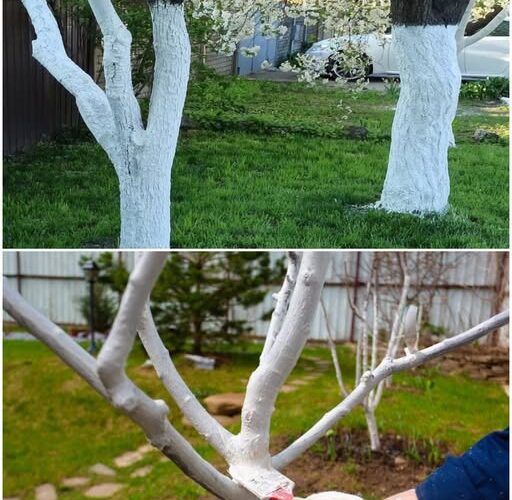
If you have fruit or decorative trees in your garden, you have surely faced problems such as cracks in the bark, fungi or pests that damage the trunk and branches. Expert gardeners know that there is a simple but very effective trick to protect trees all year round: whitewash the trunks.
This traditional method has been used for centuries to protect trees from inclement weather, prevent fungal growth, and keep pests away. Best of all, you only need to do it once a year for long-lasting results. Next, I’ll tell you what whitewashing is, why it’s so important, and how you can easily do it in your garden.
What does whitewashing consist of, why is it necessary and how to do it?
Whitewashing is a gardening technique that involves applying a mixture of lime and water to tree trunks to create a white protective layer. This layer acts as a physical and chemical barrier against pests, fungi, and the damaging effects of the weather.
- The white color reflects sunlight, which prevents the trunk from overheating or cracking due to temperature differences between day and night.
- Lime has antifungal and antibacterial properties that help prevent bark disease.
- In addition, liming makes it difficult for pests (such as ants and aphids) to climb up the trunk and attack the leaves and fruits.
Why do you need to whitewash trees?
- Protection against temperature changes
- In winter and early spring, temperature fluctuations between day and night can cause cracks in the bark of the tree.
- Liming helps keep the temperature of the log stable, reducing the risk of frost damage or extreme heat.
- Prevention of fungal and bacterial diseases
- Limescale creates an alkaline layer on the surface of the trunk that prevents the development of fungi and bacteria.
- This is especially important in humid or rainy climates, where fungal diseases are common.
- Pest Control
- Pests such as ants, aphids, and mealybugs often climb up the trunk to feed on the leaves and fruits.
- Lime acts as a physical barrier that makes it difficult for these pests to access the branches.
How to whitewash a tree step by step?
Materials Needed
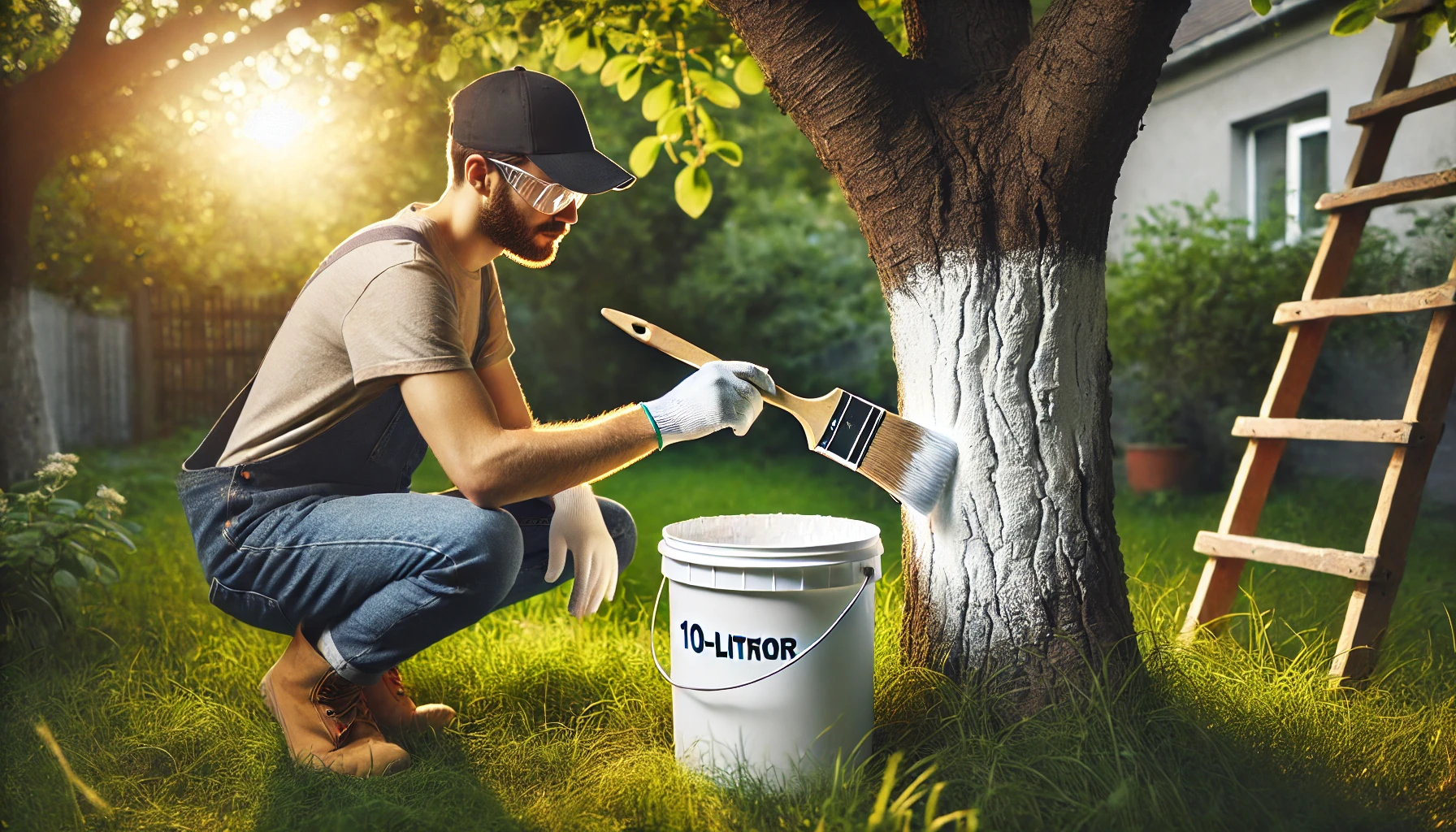
- 1 bucket of 10 liters
- 3 kg hydrated lime
- 9 liters of water (3 liters per kilogram of lime)
- A stick for mixing
- A large brush or brush
- Protective gloves and safety glasses
Procedure
- Prepare the mixture
- Take the 10-liter bucket and add the 3 kg of hydrated lime.
- Add 9 liters of water little by little (3 liters for each kilogram of lime).
- Use the stick to mix well until you get a homogeneous mixture without lumps.
- The mixture should have a consistency similar to liquid paint, not too thick or too watery.
- Preparing the Tree Trunk
- Before liming, make sure the log is clean and dry.
- If there is moss, lichen, or loose bark, remove them with a stiff bristle brush.
- If the log is wet or damp, wait for it to dry completely before applying the mixture.
- Apply lime
- Use a large brush to apply the lime mixture to the trunk of the tree.
- Start from the base and work your way up to the first fork in the branches.
- Make sure to cover all cracks and gaps in the bark well so that the limescale acts as a protective barrier.
- Allow to dry
- Let the mixture dry completely in the open air.
- If it rains in the next 24 hours, you may need to reapply a second coat to reinforce protection.
Tips and recommendations
1.The best time to whitewash
- Liming should preferably be carried out in late autumn or early winter, before the first intense frosts.
- You can also whitewash in early spring if the weather is very wet or rainy.
2. Avoid applying lime on very humid or rainy days
- If you apply the mixture on a rainy day, the limescale is likely to come off quickly.
- Choose a dry, wind-free day to ensure good adherence of the mixture to the trunk.
3. Do not enclose young or thin-barked trees
- Young or thin-barked trees can be sensitive to lime and suffer damage.
- If you need to protect a young tree, use a more diluted mix or consult a gardening specialist.
4.If the trunk has open wounds, treat them before liming
- If the tree has cracks or open wounds, treat the wound first with a copper sulfate solution or a mild fungicide.
- Allow the wound to heal before applying the lime mixture.
5.Re-whitewash only if you notice that the limescale has disappeared
- If limescale begins to wear away or flake off before the end of the year, you can reapply a light coat to maintain protection.
- Under normal conditions, a single annual application is sufficient to protect the tree.
Whitewashing is a proven and effective method of protecting the trees in your garden from damage caused by weather, pests, and diseases. With a simple mix of lime and water, you can create a protective barrier that will keep your trees healthy all year round. Best of all, you only need to do it once a year for long-lasting results. Apply this gardening trick and forget about problems with your trees until next year!