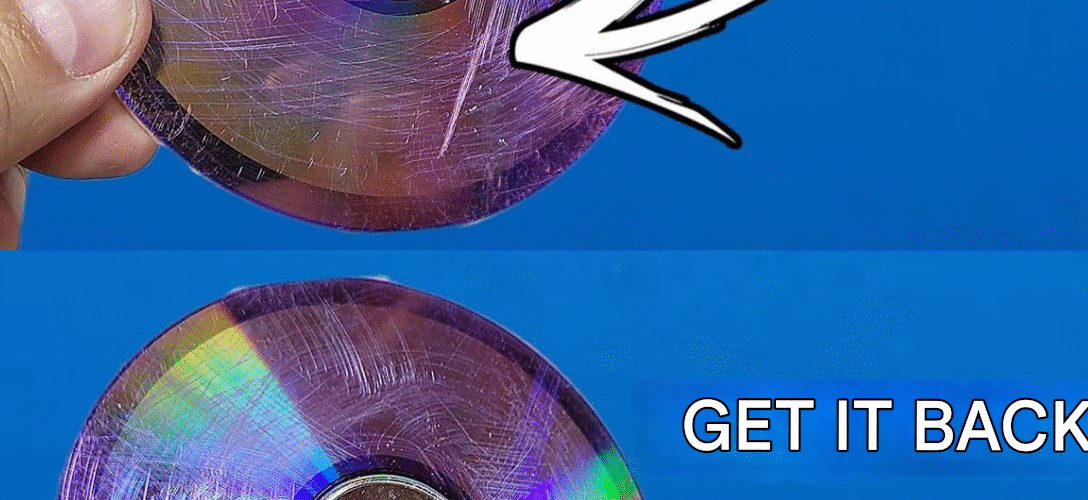
Compact discs (CDs) were one of the most popular forms of music and data storage. However, their fragility to scratches makes them susceptible to damage that can render them useless. In this article, we’ll explore an amazing method for recovering damaged CDs using common materials at home.
How does a CD work?
Before proceeding with restoration, it is important to understand how a CD stores and reads information. A CD contains a data track that is read by a laser inside the player. If this track is damaged or covered by scratches, the device will not be able to recognize the disc. Can a damaged CD be restored?
The required materials and procedure are explained below:
Materials Needed
To recover a scratched CD, you’ll need:
- Water-based sandpaper grit 1000 and 4000
- Sponge type sandpaper grit 5000
- Water
- Acrylic or metal polishing paste
- Polishing cloth (preferably a bench grinder with polishing cloth)
Steps to recover the CD
- Preparation: Wipe the CD with a dry cloth to remove dust or surface debris.
- Initial sanding: Using 1000 grit sandpaper and a little water, rub gently in circular motions. This step removes the most noticeable scratches.
- Intermediate sanding: Use 4000-grit sandpaper in the same circular pattern to further smooth out the surface.
- Final sanding: Apply 5000-grit sandpaper, which will leave the CD looking dull but without deep scratches.
- Polished: Use a polishing paste and polishing cloth (preferably with a bench grinder) to restore the shine and transparency of the polycarbonate of the CD.
- Test on the player: Once restored, place the CD in a player and check if it is recognized and can be played without skipping.
Additional tips:
- Avoid applying too much pressure when sanding, as this could remove too much material and irreparably damage the CD.
- Always use water-based sandpaper to avoid generating heat and melting the polycarbonate layer.
- If you don’t have a bench grinder, you can polish manually with a microfiber cloth and circular motions.
- Use a marker to identify the data track before sanding to avoid working in unnecessary areas.
- Store your CDs in protective cases to prevent future damage.
Important: This method proves that it is possible to recover a damaged CD with accessible materials and a little patience. While it doesn’t guarantee a perfect restore in every case, it can bring seemingly unusable discs back to life.
Give it a try and continue enjoying your music or data in physical format!