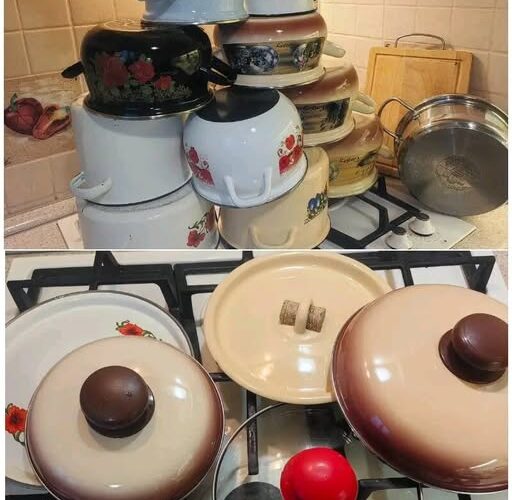
Keeping pots and cookware in tip-top shape can be a tricky task, especially when grease and dirt build up over time. Many times we resort to harsh chemicals or the effort of tirelessly rubbing them to make them shiny. However, there is one homemade and effective method that has been passed down from generation to generation: cleaning with baking soda.

This trick, popularized by our grandmothers, allows you to restore the shine to pots without the need to rub and without damaging their surface. With just half a pack of baking soda and a few simple steps, any cookware, even the most worn-out ones, can look like new.
In this article, we’ll explore how to apply this cleansing method, the benefits it offers, and some additional tips to maximize your results. If you’re looking for an easy and effective way to keep your kitchen spotless effortlessly, this homemade hack is for you!
Effectiveness of baking soda
- Effortless cleaning: With half a package of baking soda, the pots are sparkling without the need to rub.
- Traditional method: This technique has been used for generations, especially during festive times.
- Versatile Application: Ideal for cleaning both common kitchen utensils and those dedicated to the preparation of pet food.
Traditional method
This traditional method involves using half a packet of baking soda to clean the pots without rubbing.
Even the dirtiest pots, such as those used to prepare pet food, are flawless with this procedure. The baking soda helps to loosen grease and stubborn dirt, making it easier to remove with a soft sponge.
In addition, it is effective for cleaning the kitchen grill and other kitchen utensils. This method is a simple and economical alternative to keep the kitchen clean without excessive effort.
Additional tips:
- Proper proportion: Use about half a packet of baking soda for every 5 liters of water to ensure effective cleaning.
- Water temperature: Make sure the water is hot, but not boiling, to prevent damage to the utensils and improve the effectiveness of the baking soda.
- Steeping Time: Let pots and utensils soak for at least 2 hours; For more stubborn dirt, consider leaving them on overnight.
- Sensitive materials: Avoid using this method on uncoated aluminum utensils, as baking soda can cause discoloration.
- Frequency of use: Although it is a safe method, limit its use to 3-4 times a year to avoid possible wear and tear on the utensils.
- Baking soda storage: Store the baking soda in a dry and cool place to maintain its effectiveness over time.
- Natural alternatives: For a deeper clean, you can combine the baking soda with white vinegar, but do so with caution, as the mixture generates an effervescent reaction.
- Pre-test: Before applying this method to the entire surface of a utensil, test on a small area to make sure it doesn’t cause damage or discoloration.
- Use of gloves: Although baking soda is gentle on the skin, consider wearing gloves to protect your hands during the cleansing process.
- Odor Elimination: In addition to cleaning, this method helps to remove stubborn odors on cookware.
By following these additional tips, you can optimize the cleaning process and keep your kitchen utensils in excellent condition for longer!