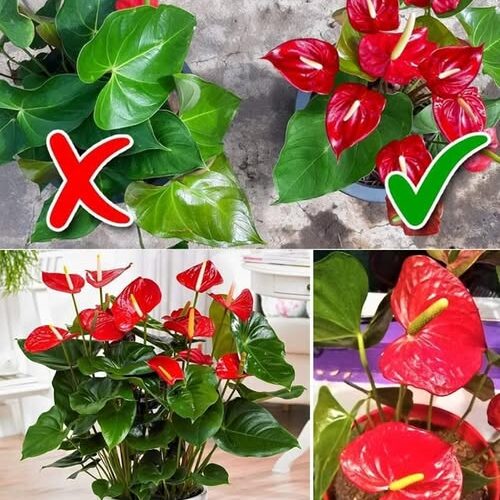
Anthurium, known for its vibrant flowers and lush foliage, is a tropical plant that, with proper care, can bloom almost year-round.
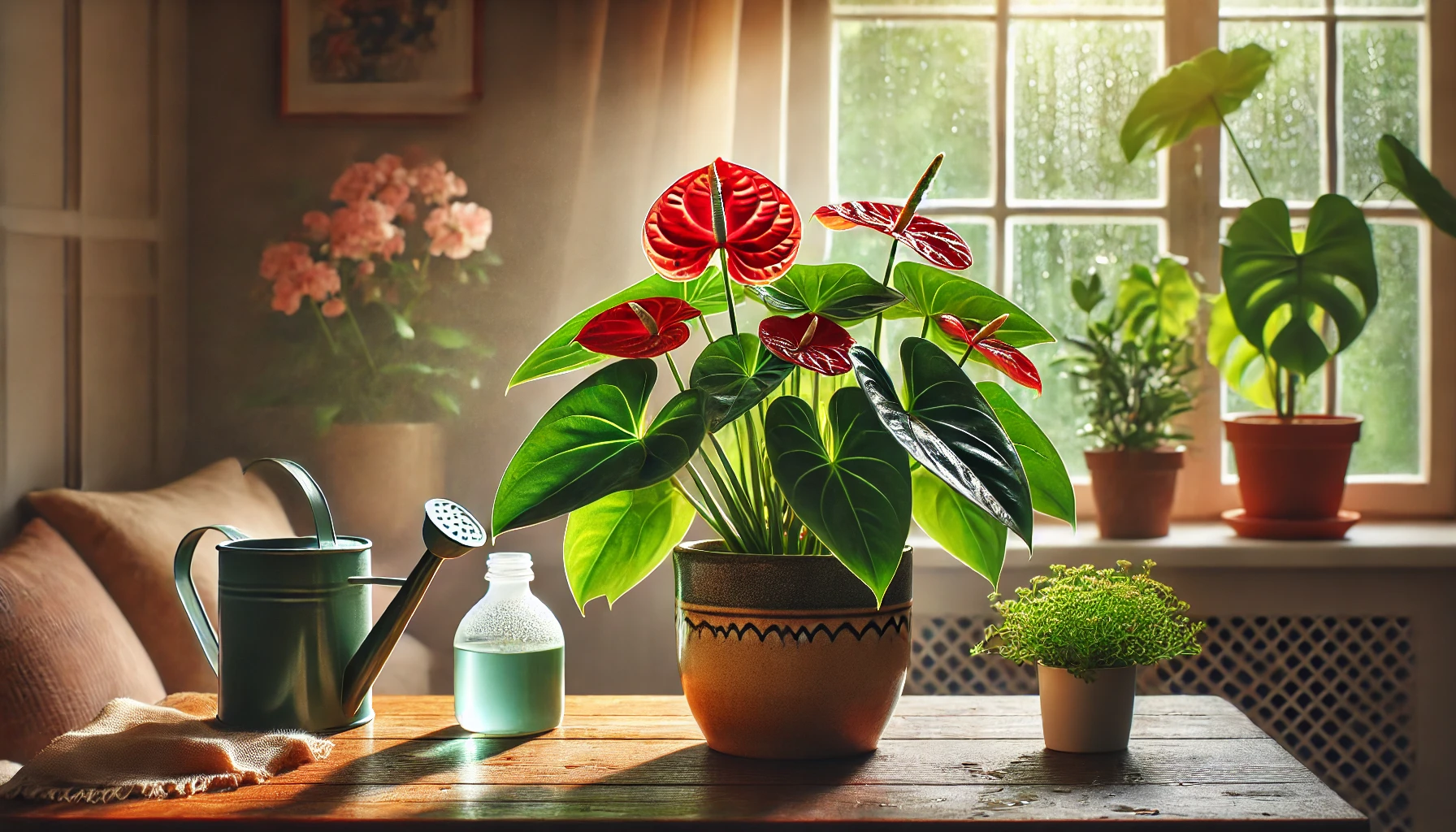
Below, the essential practices for their optimal development are detailed and additional tips are added to enhance their health and beauty.
Fundamental Requirements for Anthurium Care
- Illumination: Anthurium thrives in bright, indirect light. Direct exposure to the sun can damage its leaves, so it is advisable to place it near a window with filtered light.
- Watering: Keeping the substrate slightly moist is essential. It should be watered when the top layer of the soil is dry to the touch, avoiding both waterlogging and complete dryness. During the winter, it is advisable to reduce the frequency of watering.
- Environmental Humidity: Native to humid climates, anthurium requires high ambient humidity. If the environment is dry, it is beneficial to spray the leaves with non-calcareous water and place the pot on a tray with damp pebbles to increase the surrounding humidity.
- Temperature: The ideal temperatures for anthurium range from 20°C to 25°C. It is crucial to protect it from drafts and sudden changes in temperature, as they can negatively affect its health.
- Substrate and Drainage: A well-drained substrate is vital to prevent root rot. A mixture of orchid soil with added sand and peat provides the optimal conditions for anthurium growth.
- Fertilization: During the spring and summer, it is recommended to apply a balanced liquid fertilizer every two months, diluted to half the indicated dose, to promote vigorous growth and abundant flowering.
- Protection against Air Currents: Placing the anthurium in a place sheltered from cold drafts is essential to prevent stress and possible diseases.
Additional Tips to Enhance Anthurium Development:
- Leaf Cleaning: Regularly cleaning leaves with a damp cloth helps remove dust and facilitates photosynthesis, contributing to the overall health of the plant.
- Pot change: Repotting the anthurium every two to three years, preferably in spring, allows the substrate to be renewed and provides additional space for root growth.
- Pest Control: It is important to periodically inspect the plant to detect the presence of common pests, such as aphids or mealybugs, and treat them in a timely manner with appropriate products.
- Avoid Over-Fertilization: Since anthurium is an epiphytic plant with low nutritional needs, it is preferable to reduce the recommended fertilizer dose by half to avoid damage from overfeeding.
By following these recommendations, your anthurium will not only maintain its splendor, but will also reward it with continuous and vibrant blooming throughout the year!