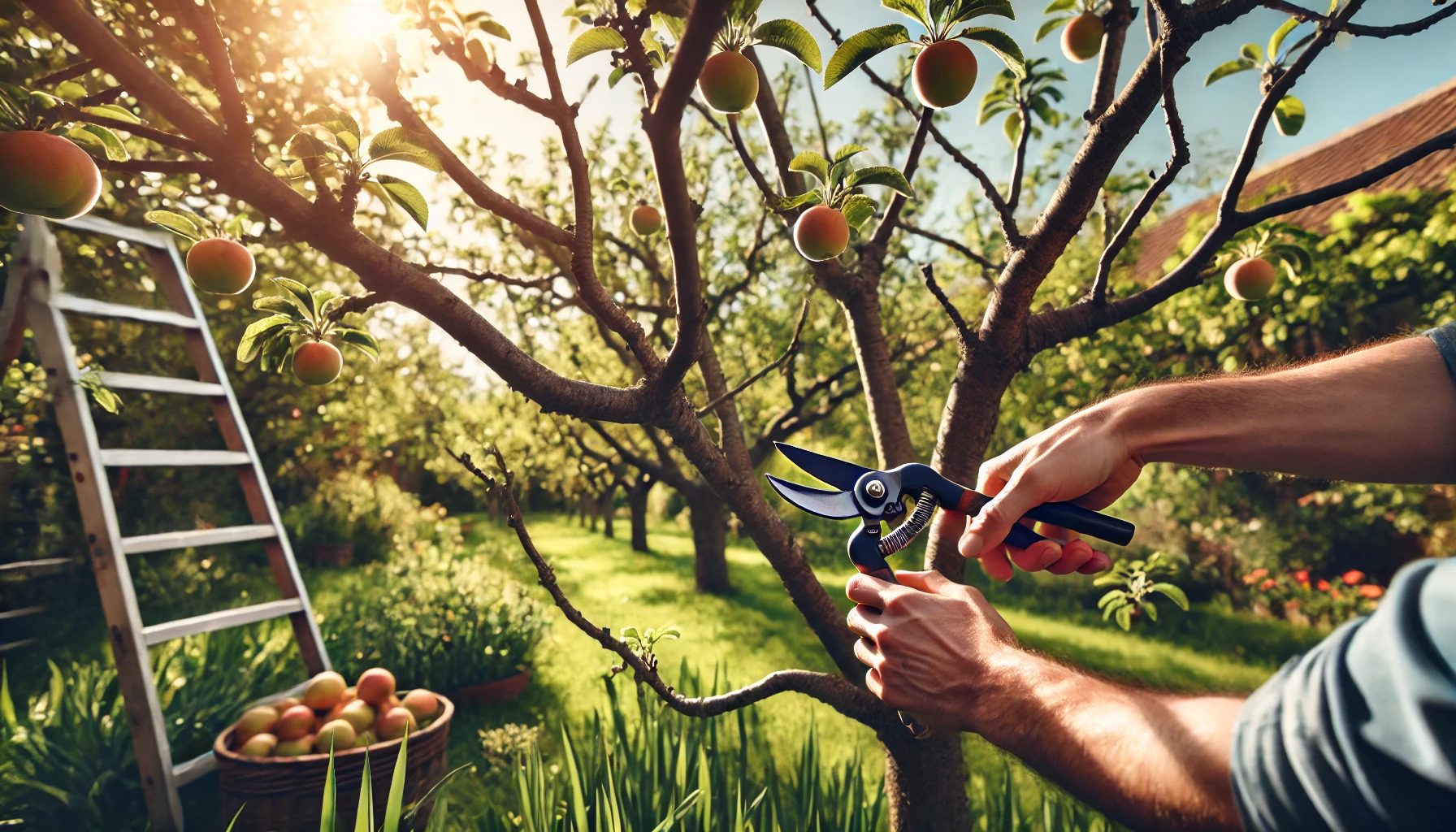
Pruning fruit trees is an essential task to maintain their health and ensure abundant and quality production. By pruning, we remove dead branches, encourage balanced growth, and allow the tree to receive enough sunlight, which is vital for good fruiting.
In addition, proper pruning helps prevent diseases and facilitates harvesting. In this article, you’ll learn how and when to prune your fruit trees for the best results.
When and How to Prune Fruit Trees
Pruning is a practice that, although it may seem intimidating at first, becomes easier with experience. Follow these tips and enjoy healthier, more productive fruit trees in your garden!
When to prune:
- Winter (training and maintenance pruning):
Winter is the ideal time to do most pruning, as the trees are at vegetative rest. This allows for a better visualization of the tree structure and planning of its shape without damaging active growth. - Summer (cleaning pruning):
During the summer, light pruning is done to remove suckers (vertical, vigorous branches) and light-blocking branches. This pruning is also useful for correcting overgrowth problems.
How to prune:
- Preparation:
- Make sure you have clean, sharp tools, such as pruning shears, saws, and gloves. Disinfect tools to avoid transmitting diseases.
- Look at the tree carefully and plan which branches you’ll remove before you begin.
- Remove dead or diseased branches:
- Cut off any branches that are dry, broken, or showing signs of disease first. This prevents the spread of pests and helps keep the tree healthy.
- Promote a balanced structure:
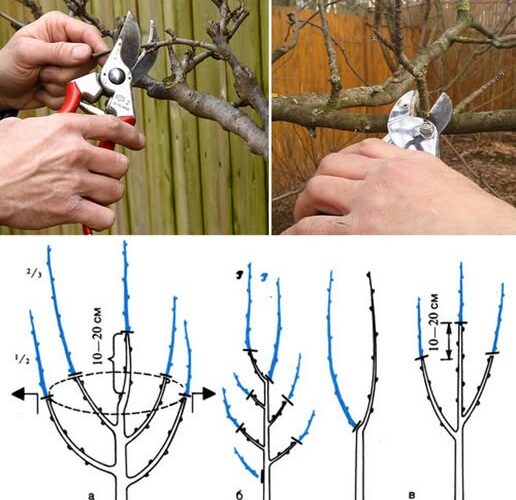
- Remove branches that cross or rub against each other, as they can damage each other and hinder air circulation.
- Look for an open shape, like a glass, so that light penetrates better.
- Eliminate pacifiers and low shoots:
- Suckers consume energy from the tree without providing fruit. Remove them during the summer or winter to maintain proper growth.
- Also cut off shoots that grow near the trunk or roots.
- Do not overprune:
- Remove a maximum of 20-30% of the tree’s mass to avoid stress. Overpruning can weaken the tree and reduce fruit production.
Tips and advice:
- Know your tree: Each fruit species has its own pruning needs. Research how to prune the trees you have (apple, citrus, cherry, etc.).
- Regular pruning: Pruning every year to prevent the branches from becoming unmanageable or the tree from losing its shape.
- Use clean cuts: Make straight cuts and avoid leaving chipped edges, as these can be entry points for disease.
- Cover large cuts: If you make cuts larger than 2-3 cm in diameter, apply wound sealant or tree putty to protect them.
- Fertilize after pruning: After pruning, fertilize the soil to help the tree recover and promote healthy new growth.