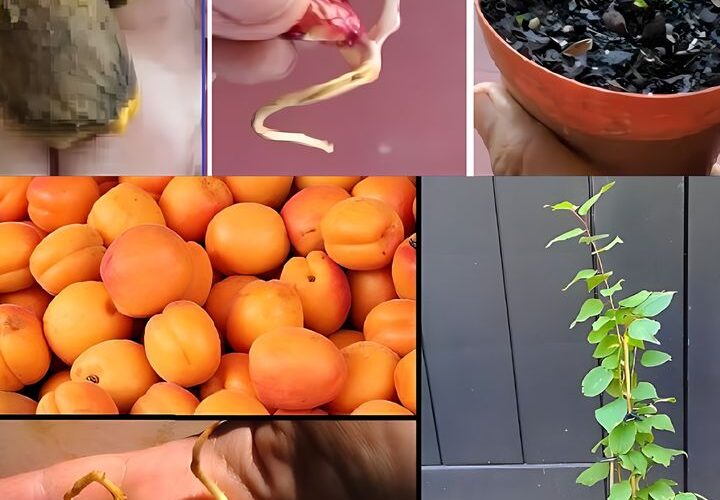
Materials Needed:
- Fresh apricot seeds (pits)
- Small pots or containers with drainage holes
- High-quality potting soil
- Watering can or sprayer
- Clear plastic wrap or plastic bags
- Refrigerator
Step-by-Step Guide:
- Select Fresh Apricot Seeds:
- Choose fresh seeds from ripe apricots. Make sure they are intact and healthy.
- Extract the Seeds:
- Remove the seeds from the pits. Rinse off any fruit residue.
- Cold Stratification:
- Place the seeds on a damp paper towel, fold it over, and seal inside a plastic bag or container.
- Refrigerate for about 8 weeks, checking periodically to keep the towel moist.
- Prepare Planting Containers:
- Fill small pots or containers with high-quality potting soil. Make sure they have drainage holes.
- Planting Seeds:
- After stratification, plant seeds about 1 inch deep in the soil.
- Plant several seeds per pot to increase the chances of germination.
- Moisture and Cover:
- Lightly water the soil to settle it around the seeds.
- Cover the pots with clear plastic wrap or place them in plastic bags to create a greenhouse effect.
- Location and Light:
- Place the pots in a warm location with indirect light.
- Maintain a temperature of 65-75°F (18-24°C).
- Watering and Care:
- Keep the soil constantly moist but not soggy. Water gently using a spray bottle or watering can.
- Transplanting Seedlings:
- When seedlings have several true leaves and are strong enough, transplant them into larger pots or directly into the garden.
- Space them at least 15-20 feet (4.5-6 meters) apart.
- Protection and Maintenance:
- Protect young trees from strong sun and wind initially.
- Water regularly and feed with balanced fertilizer throughout the growing season.
- Patience and Growth:
- Apricot trees grow slowly at first. Be patient and consistent with care.
- Prune as needed to encourage a strong structure and better fruit production.
- Harvesting:
- Depending on the variety, trees may begin to produce fruit in 3-4 years or more.
- Harvest mature apricots by gently twisting them off the stem when they are fully colored and slightly soft.
Tips for Success:
- Variety Selection: Choose varieties appropriate for your climate zone.
- Soil and Drainage: Make sure you have well-drained soil to avoid waterlogging.
- Pollination: Some varieties may require cross-pollination.
- Winter Care: Protect young trees from frost during the winter.